In short
- About 1 in 12 first-time tests of cars and light vans (8.7%) had a failing suspension defect in 2024 to 2025 (DVSA). That is the second most common area[7].
- A slight film of fluid on a shock absorber passes, but severe leaking is a major fault and the car fails[1].
- A broken coil spring is a major fault, so the car fails[1].
- Worn joints and bushes fail when the wear is excessive, while early wear can be noted as an advisory[1][4].
- Among the commonest items, suspension was 6% of major and dangerous fault records at age 3 and 26% at age 12. This is MOT Wise analysis of DVSA MOT results, 2025, for all MOT-tested vehicles.
On this page
- Can suspension fail an MOT?
- What the MOT checks on suspension
- Is a broken coil spring an MOT fail?
- Can a leaking shock absorber fail an MOT?
- Do worn ball joints and bushes fail an MOT?
- How suspension faults change with age
- Suspension on a car's MOT history
- Suspension and the MOT: myths and facts
- Common questions
- Sources
Yes. The MOT is the yearly check that a car is safe and fit for the road, and it includes the suspension. Suspension means the springs, shock absorbers, arms and joints that hold each wheel to the car and smooth out bumps.
It is one of the commonest places for an MOT fault. In 2024 to 2025, about 1 in 12 first-time tests of cars and light vans (8.7%) had a failing suspension defect. Only lamps and electrical equipment came higher[7]. "First-time tests" are the first test of each MOT, with retests left out. DVSA calls them initial tests.
The tester grades every fault. Dangerous and major faults fail the car. A minor fault, which has little effect on safety, doesn't. Nor does an advisory, which is something the tester noticed that may need work soon[5]. Our guide to minor, major and dangerous MOT faults explains each grade.
- 8.7%
- of first-time tests had a failing suspension defect. Only lamps and electrical equipment came higher.
- DVSA first-time tests of cars and light vans, April 2024 to March 2025[7].
- 19.4%
- of all the failing defects found were in the suspension.
- Same tests. One test can have several defects.
- 0.5%
- of first-time tests had a dangerous suspension defect.
- Suspension is 5.3% of all dangerous defects. Tyres and brakes are 89% between them.
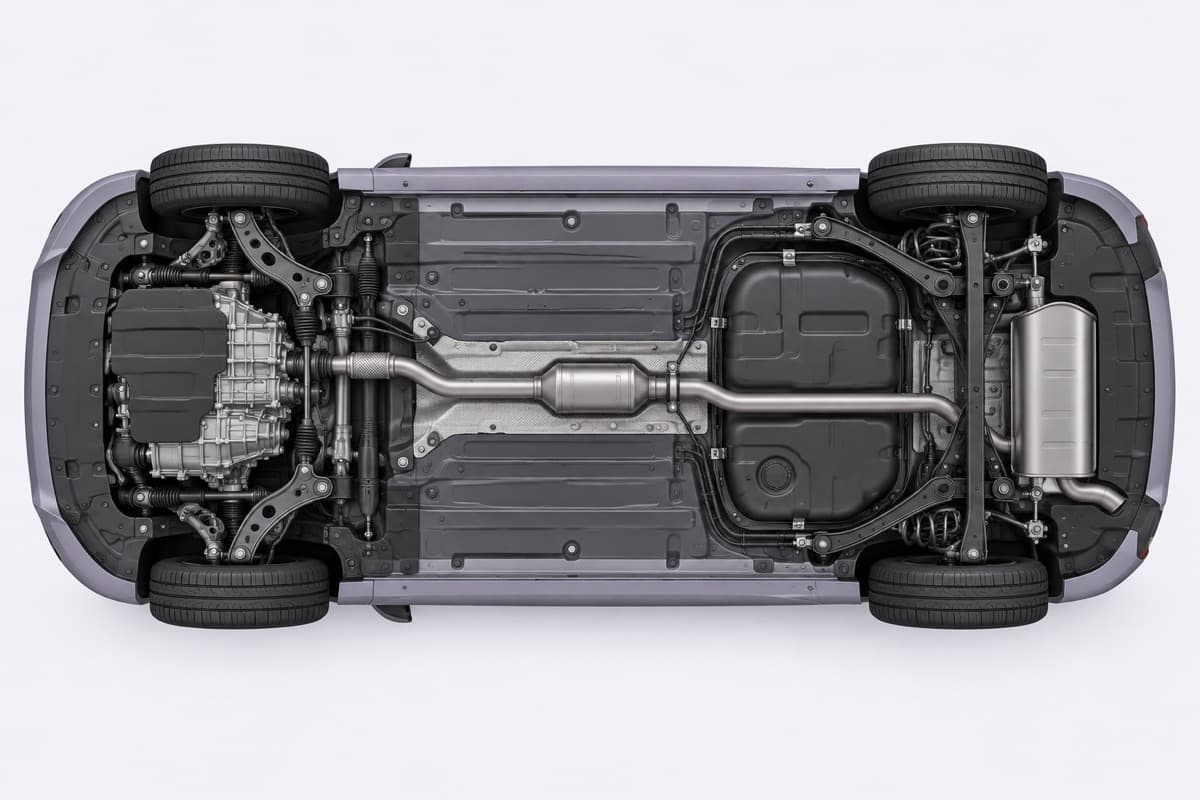
The tester checks each part for play, which means movement that shouldn't be there. They jack the car up and use bars and play detectors on the joints and rubber bushes. They look over each part as well[1].
| Part | Fails (major) |
|---|---|
| Springs | A spring that is cracked, broken or seriously weakened. A missing spring. A spring that is not fitted securely. Dangerous: Fixings so loose that movement can be seen. A missing spring that affects control of the car. Not a fail: A missing rubber bump stop (a small cushion). |
| Shock absorbers | Severe leaking. One so damaged it doesn't work, or that hardly controls the bounce. A badly worn rubber bush. One that is loose. Dangerous: One that is missing or likely to come off. Not a fail: A slight film of fluid. A missing shock absorber on a car that was never fitted with them. |
| Arms, links, anti-roll bars and subframes | Loose or insecure. Badly damaged or corroded. Dangerous: Missing or likely to come off. Leaving the car's direction unstable. Cracked through or likely to fail. Not a fail: Rust or damage that has not seriously weakened the part. It may be noted as an advisory. |
| Ball joints, pins and bushes | Excessive wear, which means too much play. A dust cover that is missing or no longer keeps dirt out. Dangerous: Worn so much that it is likely to come apart. Not a fail: Early wear, which may be an advisory. A dust cover that is badly worn but still keeps dirt out (minor). |
| Steering joints and rack gaiters | Excessive wear or play in a steering ball joint. A gaiter (the rubber cover on the steering rack) that is missing or no longer keeps dirt out. Dangerous: A steering ball joint worn so much that there is a serious risk of it coming apart. Not a fail: A damaged gaiter that still keeps dirt out (minor). |
| Wheel bearings | Excessive play or roughness. Dangerous: So bad that the bearing may break up, or control of the car is affected. Not a fail: No lesser grade is listed. |
| Air, gas and fluid suspension | An obvious leak. Dangerous: A system that is not working. Not a fail: No lesser grade is listed. |
| Body metal near a mounting | Metal within 30 cm of a spring, subframe or suspension mounting that is significantly weakened or poorly repaired. Dangerous: So weak that control of the car is likely to be affected. Not a fail: Rust that has not seriously weakened it. See rust and the MOT. |
From the MOT inspection manual: 5.3 Suspension[1], 2.1.3 Steering linkage[2] and 5.1.3 Wheel bearings[3]. Major and dangerous faults fail the MOT. Minor faults and advisories do not.
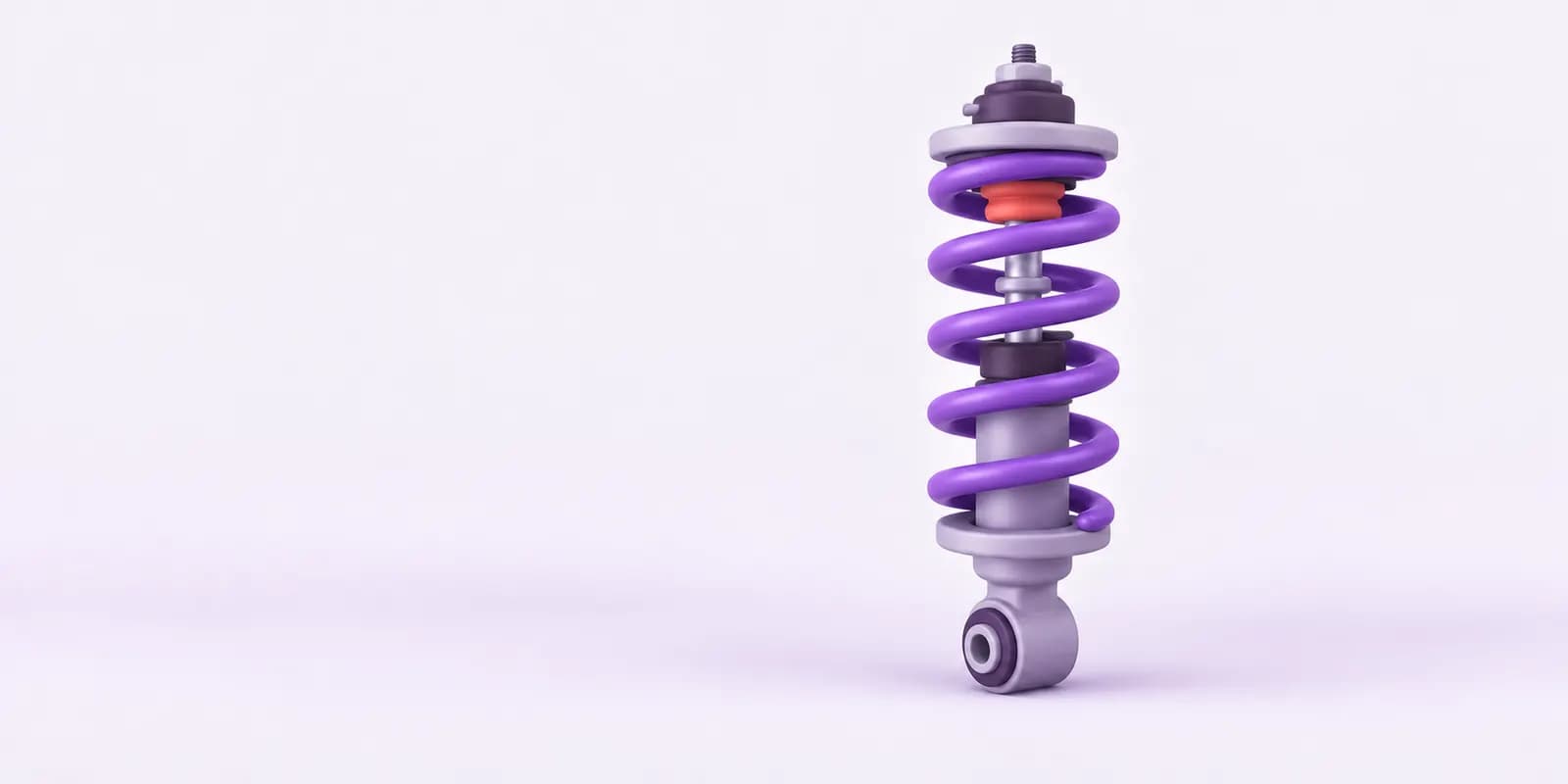
Yes. A coil spring that is cracked, broken or seriously weakened is a major fault, so the car fails[1]. A missing spring is major too.
It is graded dangerous only in some cases. One is fixings so loose that movement can be seen. Another is a missing spring that affects the driver's control of the car's direction[1].
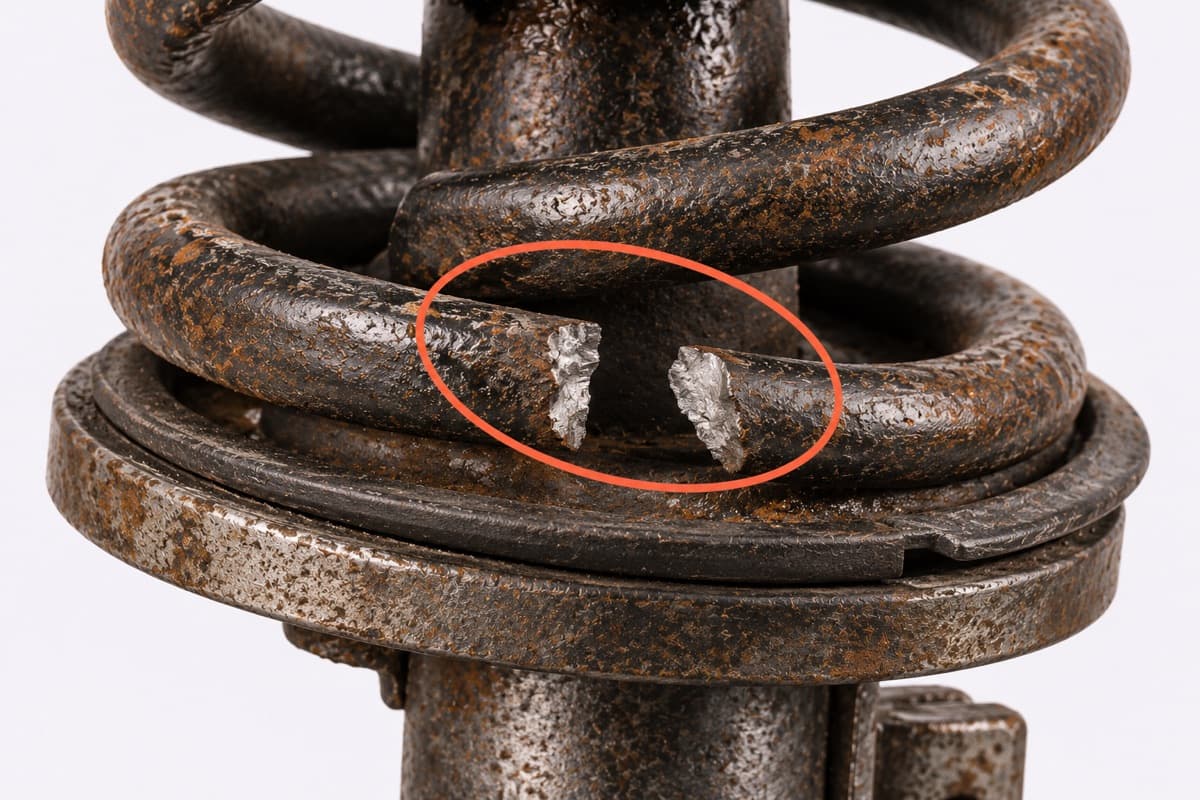
A rusty spring that is still whole is a milder case. In 2025, about 1 in 20 MOTs (5.5%) had a coil spring note recorded. Of those records, 73% were advisories for a corroded spring. The other 27% were fails. Under the same code, a fail means a broken or badly weakened spring (MOT Wise analysis of DVSA MOT results, 2025; all MOT-tested vehicles).
If a spring fail is on a car's record, ask when the spring was replaced, and ask to see the invoice.
It depends how bad the leak is. A shock absorber is the part that controls how much the car bounces after a bump. A slight film of fluid on it is not a reason to fail[1].
Severe leaking is a major fault. So is a shock absorber that is so damaged it doesn't work, or one that hardly controls the bounce at all. One that is missing or likely to come off is dangerous[1].
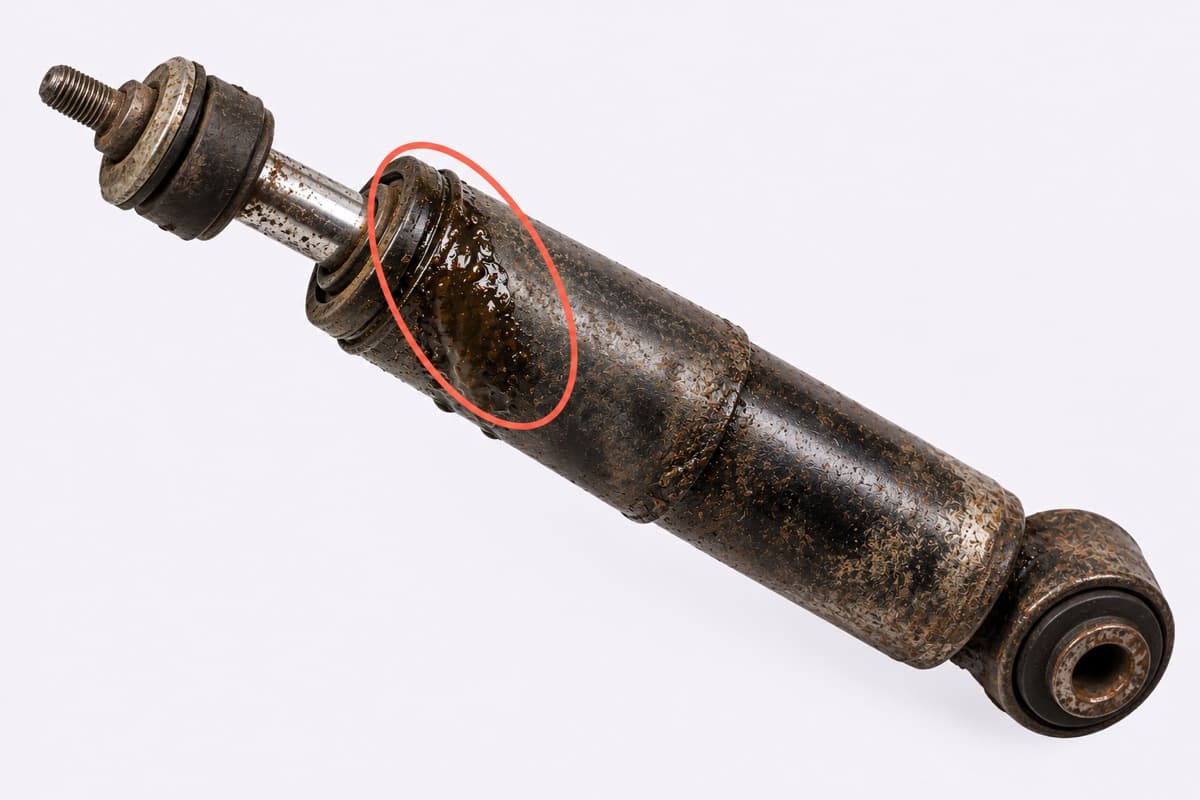
The commonest shock absorber note on test results is a light misting of oil. In 2025, about 1 in 25 MOTs (4.2%) had it recorded. Most of those records (85%) were advisories. The rest were fails, which under the same code means a serious leak (MOT Wise analysis of DVSA MOT results, 2025; all MOT-tested vehicles).
Ball joints are the pivots that let a wheel move up and down and turn. Bushes are rubber sleeves that cushion the arms and links where they join the car. Both wear with use.
A joint, pin or bush with excessive wear is a major fault. One that is likely to come apart is dangerous[1]. A rubber bush fails only when the rubber, or the bond holding it, has seriously deteriorated[1].
The rubber cover over a joint keeps dirt out, and it counts too. A cover that is badly worn is a minor fault. One that is missing, or no longer keeps dirt out, is major[1].
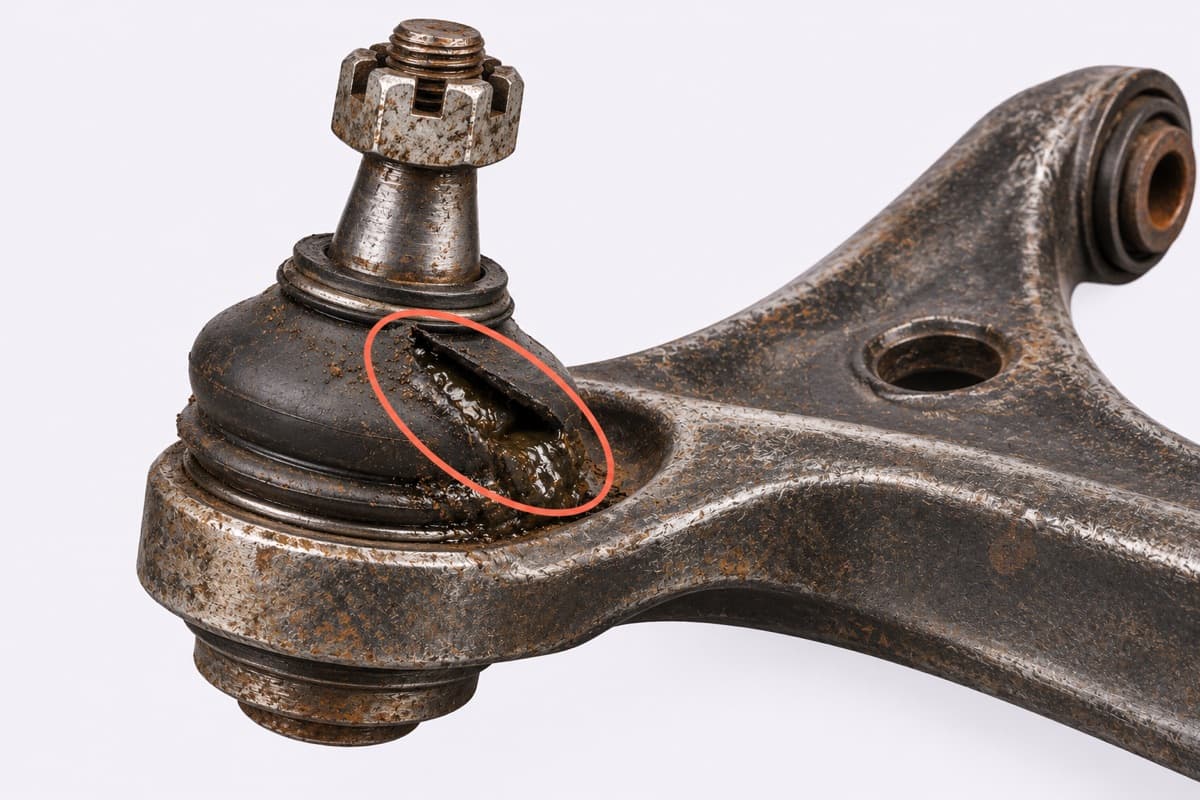
Anti-roll bar links, the short rods that join the anti-roll bar to the suspension, have no row of their own. The tester judges them as suspension parts with joints[1].
Worn arm pins and bushes are the commonest suspension item on test results. In 2025, about 1 in 8 MOTs (12%) had one recorded. Of those records, 79% were advisories and 21% were fails. It has the most failure records of the ten commonest items (1,691,077). A failure record is a line recorded as major or dangerous (MOT Wise analysis of DVSA MOT results, 2025; all MOT-tested vehicles).
Suspension makes up a bigger share of major and dangerous fault records at older ages. Among the commonest items, it was 6% at age 3 and 26% at age 12. This is MOT Wise analysis of DVSA MOT results, 2025.
At ages 10, 12, 15 and 17, suspension is the biggest share of those failure records. At ages 3, 5 and 7, tyres are. These shares are of the 100 commonest items at each age. They cover all MOT-tested vehicles (MOT Wise analysis of DVSA MOT results, 2025).
Advisory records follow the same pattern. The chart below shows suspension's share of them.
- Age 3
- 6%
- Age 5
- 8%
- Age 7
- 13%
- Age 10
- 22%
- Age 12
- 26%
- Age 15
- 30%
- Age 17
- 30%
- Age 20
- 28%
- Age 25 and over
- 24%
MOT Wise analysis of DVSA MOT results, 2025. Suspension's share of the advisory records among the 100 commonest items at each age. Advisory records are advisory notes plus faults fixed at the test station. One car with two worn parts gives two records.
So suspension is a bigger share of advisory records at older ages. At age 15, among the commonest items, it is 30% of advisory records, more than any other area. This is MOT Wise analysis of DVSA MOT results, 2025. It is worth asking what the advisory is, and whether it comes back.
| Item | MOTs with it recorded | Advisory / fail / minor | Age 3 | Age 12 | Age 17 |
|---|---|---|---|---|---|
| Arm pin or bush worn, but not moving too much | about 1 in 8 MOTs (12%) | 79% / 21% / 0% | 1.5% | 16.4% | 20.4% |
| Coil spring corroded | about 1 in 20 MOTs (5.5%) | 73% / 27% / 0% | 0.1% | 8.3% | 11.1% |
| Suspension part corroded, but not seriously weakened | about 1 in 20 MOTs (4.6%) | 96% / 4% / 0% | Less than 0.1% | 6.4% | 11.5% |
| Shock absorber has a light misting of oil | about 1 in 25 MOTs (4.2%) | 85% / 15% / 0% | 1.4% | 5.1% | 6.5% |
| Ball joint dust cover badly deteriorated | about 1 in 50 MOTs (1.9%) | 0% / 0% / 100% | 0.1% | 2.5% | 4.3% |
MOT Wise analysis of DVSA MOT results, 2025. Share of MOTs of all MOT-tested vehicles with the item recorded at any level. First for ages 3 and over, then at the ages shown. The three figures after it show how that item's records split between advisory, fail and minor. Advisory includes faults fixed during the test.
An advisory means the tester saw wear that had not yet reached the point of failing[4]. The record can't tell you how soon it will become a fail, or what the repair will cost.
So read the pattern, not just the grade. The same suspension advisory at test after test is worth a question: was it repaired, or just left? Our guide to MOT advisories explains more.
Suspension: what to look for in the record
0 of 6 done
A test drive can't show everything. A tester needs the car on a lift. If you have doubts about the suspension, ask a garage to check it on a lift before you decide.
Myth
Any oil on a shock absorber fails the MOT.
What's true
A slight film of fluid is not a reason to fail. Severe leaking is.
Myth
A broken coil spring is a dangerous fault.
What's true
By default it is major. Dangerous applies only in some cases, such as fixings so loose that movement can be seen.
Myth
Ball joint play is always just an advisory.
What's true
Excessive wear is a major fault. A tester can still note early wear as an advisory.
Myth
The tester bounces each corner of the car to check the suspension.
What's true
They jack the car up and use bars and play detectors, as well as looking over each part.
Some kinds of fault tend to turn up together in the same test. Our guide to MOT failures that come in pairs shows which. Brakes and tyres are the other two big areas: see brakes and the MOT and tyres and the MOT. For how fail rates change with age, see MOT failure rates by age.
Common questions
Can a leaking shock absorber fail an MOT?
Yes, if the leak is severe. A slight film of fluid is not a reason to fail. A shock absorber that is badly damaged, doesn't work or hardly controls the bounce is a major fault, and the car fails.
Is a broken coil spring an MOT fail?
Yes. A spring that is cracked, broken or seriously weakened is a major fault. It is graded dangerous only in some cases, such as fixings so loose that movement can be seen.
Will worn ball joints or bushes fail an MOT?
They fail when the wear is excessive, which is a major fault. Early wear that isn't bad enough to fail may be noted as an advisory. A joint that is likely to come apart is dangerous.
How do MOT testers check suspension?
The tester jacks the car up, which you can't do at a viewing. On a test drive you can notice how the car rides over bumps and whether anything knocks or rattles. You can also read the suspension entries in the record. If you have doubts, ask a garage to check it on a lift before you decide.
Is a suspension advisory a fail?
No. An advisory is something the tester noticed that may need work soon, and the car still passes. It is worth asking whether it was repaired before the next test.
Sources
- MOT inspection manual: 5.3 Suspension. DVSA, 2026.
- MOT inspection manual: 2.1.3 Steering linkage condition. DVSA, 2026.
- MOT inspection manual: 5.1.3 Wheel bearings. DVSA, 2026.
- MOT inspection manual: Introduction (18 Recording defects). DVSA, 2026.
- MOT rule changes: 20 May 2018. GOV.UK (DVSA), 2018.
- Getting an MOT: MOT test result. GOV.UK (DVSA), 2024.
- MOT testing data for Great Britain. DVSA, 2026. Table DVSA/MOT/03: classes 3 and 4, initial failures by defect category.