In short
- An MOT advisory is something the tester noticed that may need work soon, but isn’t bad enough to fail the car[1].
- You don’t have to fix an advisory by a set date, but the car must stay roadworthy at all times[5][2].
- Giving an advisory is the tester’s call, so two testers may not note the same thing[3].
- On a used car, a few advisories are common. What they are, and whether the same ones keep coming back, matter more than the number.
On this page
- What is an MOT advisory?
- Advisory, minor, major, dangerous: what is the difference?
- Do you have to fix an MOT advisory?
- Common mistakes about MOT advisories
- The commonest MOT advisories, in plain English
- How many advisories is normal?
- Which parts get the advisories, and how that changes with age
- Reading advisories on a car you’re looking at
- Common questions
- Sources
The MOT is the yearly check that a car is safe and fit for the road. An advisory is a note from the tester about a part that isn’t faulty yet, but will soon need work[1].
Since 20 May 2018, testers have graded faults as dangerous, major or minor. Advisories sit alongside those grades[1]. Dangerous and major problems fail the car. Minor problems and advisories don’t[4].
So a pass can still come with a list of minor problems and advisories to watch or fix[5]. They are the early warnings, and they are often the most useful part of an MOT record.
| Label | What it means |
|---|---|
| DangerousResult: Fail | A direct and immediate risk to road safety or the environment. Do you have to fix it? Yes. The car must be repaired before it is driven away[5]. |
| MajorResult: Fail | A fault that may affect safety, harm the environment or put other road users at risk. Do you have to fix it? Yes. The car fails until it is repaired. |
| MinorResult: Pass | A fault with no significant effect on safety or the environment. Do you have to fix it? Not to pass. GOV.UK says to monitor it or fix it in future[5]. |
| AdvisoryResult: Pass | Something the tester noticed. The part isn’t faulty yet, but the tester expects it to need work soon. Do you have to fix it? No set deadline. Keep an eye on it. |
Summarised from DVSA’s MOT inspection manual[4] and its explanation of the 2018 changes[1].
Minor and advisory sound alike, but they aren’t the same. A minor defect is a fault on a list in the testers’ manual, and it is graded as part of the test. An advisory is the tester’s own early warning about a part that hasn’t failed[1].
Two examples from the manual show the difference. An obstruction in the driver’s view, outside the part of the windscreen the wipers clear, is graded minor[6]. When it is unclear whether a tyre pressure warning light means a fault, the tester is told to add advisory information instead[7].
Our guide to minor, major and dangerous MOT faults goes through each grade in more detail.
Not to pass: the car has already passed. Official guidance gives no deadline for fixing an advisory[5].
The keeper (the person the car is registered to) must still keep the car roadworthy at all times. GOV.UK points out that a car can be unsafe even with a current MOT. Driving a car in a dangerous condition can mean a fine of up to £2,500, a driving ban and 3 penalty points[2]. These limits apply as of 10 October 2026.
At the next full test, the tester judges each part on how it is that day[4]. So an advisory is a warning that a part may fail next time, not a promise that it will.
After a fail, a partial retest also covers any minor defects and advisories from the first test[4]. Our guide to how MOT retests work has the rules.
Myth
An advisory means the car will fail next year.
What's true
It’s a warning, not a prediction. The next tester judges each part on the day, so the part may have been repaired, or may have worn further. The record can’t show which.
Myth
You have three months to fix an advisory.
What's true
GOV.UK and DVSA set no deadline like that. The legal duty is to keep the car roadworthy all the time.
Myth
Every tester gives the same advisories.
What's true
They don’t. It is the tester’s choice, and in 2015 DVSA warned that some advisories were being overused and repeated year after year[3]. That blog post is old, so treat it as background.
Myth
One advisory means a car has been poorly looked after.
What's true
A single advisory is common (MOT Wise analysis of DVSA MOT results, 2025). The pattern matters more: the same one coming back, test after test, with no sign of a repair.
Tyres, brakes and suspension are among the commonest items at each age, including faults fixed during the test. These are the parts that wear with use. This table shows the commonest items in the MOT record, in the testers’ own words, with what each one means.
| Item as the MOT words it | What it means |
|---|---|
| Tyre worn close to the legal limit, or worn on the edge | The tread is getting low, or one edge is wearing faster than the rest. MOTs with it recorded: about 1 in 5 MOTs (18.8%) Recorded as advisory or fail: 92% advisory, 8% fail |
| Suspension arm pin or bush worn, but not moving too much | A joint in the suspension has started to wear, but it still holds. MOTs with it recorded: about 1 in 8 MOTs (12%) Recorded as advisory or fail: 79% advisory, 21% fail |
| Tyre slightly damaged, cracking or perishing | Small cracks or damage in the rubber, not deep enough to fail. MOTs with it recorded: about 1 in 9 MOTs (10.8%) Recorded as advisory or fail: 86% advisory, 14% fail |
| Brake disc worn, pitted or scored, but not seriously weakened | The metal disc the pads grip is marked or pitted, but still strong enough. MOTs with it recorded: about 1 in 10 MOTs (9.3%) Recorded as advisory or fail: 98% advisory, 2% fail |
| Brake pads wearing thin | The pads are getting low and will need replacing. MOTs with it recorded: about 1 in 12 MOTs (8.5%) Recorded as advisory or fail: 85% advisory, 15% fail |
| Oil leak, but not excessive | Oil is leaking, but not enough to fail. MOTs with it recorded: about 1 in 15 MOTs (6.7%) Recorded as advisory or fail: 98% advisory, 2% fail |
| Coil spring corroded | Rust (the MOT says corrosion) on a coil spring in the suspension. MOTs with it recorded: about 1 in 20 MOTs (5.5%) Recorded as advisory or fail: 73% advisory, 27% fail |
| Brake pipe corroded or covered in grease | The metal pipes that carry brake fluid are rusty or coated in grease. MOTs with it recorded: about 1 in 20 MOTs (4.6%) Recorded as advisory or fail: 90% advisory, 10% fail |
MOT Wise analysis of DVSA MOT results, 2025. Counts MOTs at which the item was recorded at any level, for MOT-tested vehicles aged 3 and over. The advisory share also includes faults put right during the test, which the data can’t separate. For tyres, brakes and suspension, almost all are true advisories.
Look at the last column. A tyre close to the limit is recorded in about 1 in 5 MOTs (18.8%). Only 8% of those records are fails. Most are a warning, which is what an advisory is for.
Some common items are recorded as minor, not as advisories. One number plate light not working is recorded as a minor defect in about 1 in 30 MOTs (3.3%). Windscreen damage that still lets the driver see clearly is recorded as minor in about 1 in 40 MOTs (2.9%). Both figures come from MOT Wise analysis of DVSA MOT results, 2025. Minor defects don’t fail the car.
Other items work the other way. When a wiper that doesn’t clear the screen is recorded, 73% of those records are fails. For a position lamp (a sidelight or rear light) that doesn’t work, it is 71%. Both figures come from MOT Wise analysis of DVSA MOT results, 2025. The rest are advisories or faults put right during the test.

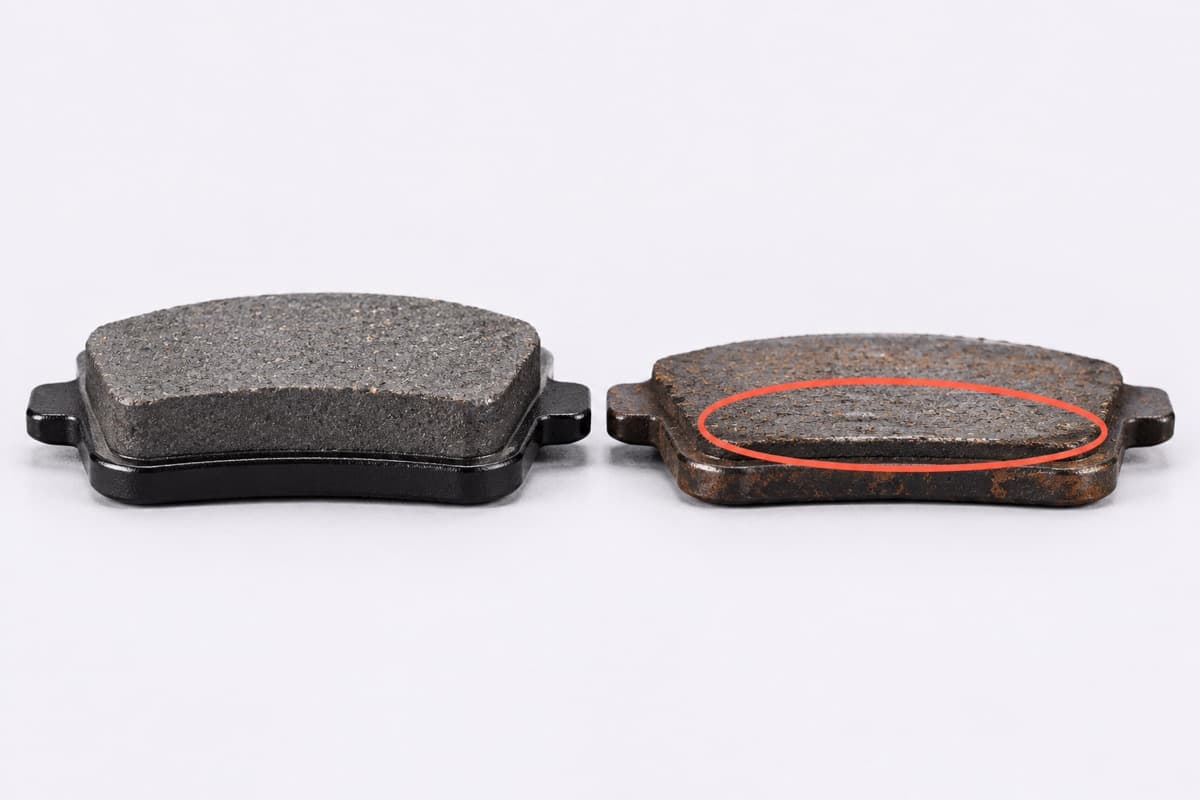
We have more on the parts behind these notes in our guides to tyres and brakes.
There is no right number. This table shows how many advisories vehicles had on their latest MOT of 2025, by age. It counts faults put right during the test too, because the data can’t tell them apart.
| Age of vehicle | Half had no more than | Three in four had no more than |
|---|---|---|
| 3 years | 0 | 1 |
| 5 years | 0 | 1 |
| 7 years | 0 | 2 |
| 10 years | 1 | 2 |
| 12 years | 1 | 3 |
| 15 years | 2 | 3 |
| 17 years | 2 | 4 |
| 20 years | 2 | 4 |
Advisories on each vehicle’s latest MOT of 2025, one test per vehicle, with faults put right during the test included. All MOT-tested vehicles (which include light vans and motorbikes as well as cars), between 480,650 and 2,543,513 at each age shown. MOT Wise analysis of DVSA MOT results, 2025.
At 7 years old, at least half of vehicles had no advisory at all. By 15, half had two or fewer, and three in four had three or fewer. The count levels off from about 17 years. So a few advisories on an older car is normal.
These figures describe groups of vehicles. They can’t tell you what is right for one car. What the advisories are, and whether they keep coming back, tell you more than how many there are.
The kind of advisory differs by age. At younger ages tyre notes lead; at older ages suspension and rust notes are more common.
| Part of the car | 3 years old | 7 years | 12 years | 17 years |
|---|---|---|---|---|
| Tyres | 55% | 41% | 27% | 19% |
| Brakes | 24% | 29% | 24% | 22% |
| Suspension | 6% | 13% | 26% | 30% |
| Lamps and electrical | 4% | 4% | 5% | 6% |
| Body and structure | 0% | 1% | 3% | 5% |
| Exhaust, noise and leaks | 1% | 3% | 5% | 7% |
Share of advisory records among the 100 commonest items recorded at each age. One vehicle can have several records, and faults put right during the test are counted. All MOT-tested vehicles aged 3 and over, 2025. MOT Wise analysis of DVSA MOT results, 2025.
Rust (the MOT says corrosion) is part of that shift. At 12 years old there were 31.4 corrosion advisory records for every 100 MOTs, against 5.1 corrosion failure records. That counts the 100 commonest items at that age (MOT Wise analysis of DVSA MOT results, 2025). So most rust notes are advisories rather than fails.
Anyone can look up a car’s MOT history for free on GOV.UK. It covers cars tested in England, Scotland and Wales since 2005 (Northern Ireland tests from 2017)[8]. It shows what failed and the minor problems recorded[8]. Northern Ireland tests show only the result and the mileage. Our guide to how to check MOT history shows how to read it.
Reading a car’s advisories
0 of 8 done
Our guide to questions to ask a seller has more on what to ask about the record.
Common questions
What is an MOT advisory?
It is a note from the tester about something that is not faulty yet but may need work soon. The car still passes. Minor defects also leave the car passing, but they are listed faults that the tester grades as part of the test.
Do I have to fix MOT advisories?
Official guidance sets no deadline for fixing an advisory. But you must keep the car roadworthy at all times, so a worn tyre or brake part is worth dealing with soon. Fixing it before the next MOT also avoids a possible fail.
Can you drive with MOT advisories?
Yes. A car with advisories has passed its MOT. It must still be safe to drive. If a part feels or sounds wrong, get it checked rather than waiting for the next test.
What is the difference between an advisory and a minor defect?
Both leave the car passing. A minor defect is a listed fault that the tester grades as part of the test. An advisory is the tester’s own warning about a part that has not failed yet.
Will an advisory fail my next MOT?
Not automatically. At the next test the tester judges each part on how it is that day. An advised part may have worn further by then, so it can fail. Repairing it first reduces that risk.
Sources
- How the new MOT defect categories will work. DVSA (Matters of Testing blog), 2018.
- Check your vehicle is safe to drive. GOV.UK.
- Giving the right advice. DVSA (Matters of Testing blog), 2015. An old post, used as background on how testers decide whether to give an advisory.
- MOT inspection manual: Introduction (defect groups and retests). DVSA, 2026.
- Getting an MOT: MOT test result. GOV.UK.
- MOT inspection manual: 3. Visibility. DVSA, 2026.
- MOT inspection manual: 5.2.3 Tyres. DVSA, 2026.
- Check the MOT history of a vehicle. GOV.UK (DVSA).
- Car parts checked at an MOT. DVSA, 2015.