In short
- The MOT measures how hard each wheel brakes, on a roller or plate tester, and compares the two sides of the car[2].
- Testers also look at pads, discs, pipes and hoses, the parking brake, the brake fluid and the ABS warning light[3].
- Pads worn thinner than 1.5 mm are a dangerous fault. The car fails, and GOV.UK says not to drive it until it is repaired[3][6].
- A lit brake pad wear light, or discs thinner than the maker’s minimum, don’t fail a car on their own[3].
- Brakes were 29.0% of all dangerous faults in first-time MOT figures for April 2024 to March 2025, second only to tyres[7]. The figures come from DVSA, the government agency that runs the MOT.
On this page
- What does the MOT brake test check?
- How often do brakes fail the MOT?
- How are brake efficiency and imbalance measured?
- Brake pads and discs: when do they fail?
- Brake pipes and hoses: why rust matters
- Parking brake, ABS and brake fluid
- What brake notes on an MOT history mean
- Brake checks on a test drive
- Common questions
- Sources
The MOT is the yearly check that a car is safe and fit for the road. The brake check has two halves. A machine measures how hard each wheel brakes. The tester also looks at the brake parts and the warning lights, without taking the brakes apart[1].
The measuring is done on a roller or plate brake tester. A car that can’t go on the rollers gets a road test instead. A meter shows how fast it slows[2].
- How hard each wheel brakes, and whether one side brakes much less than the other
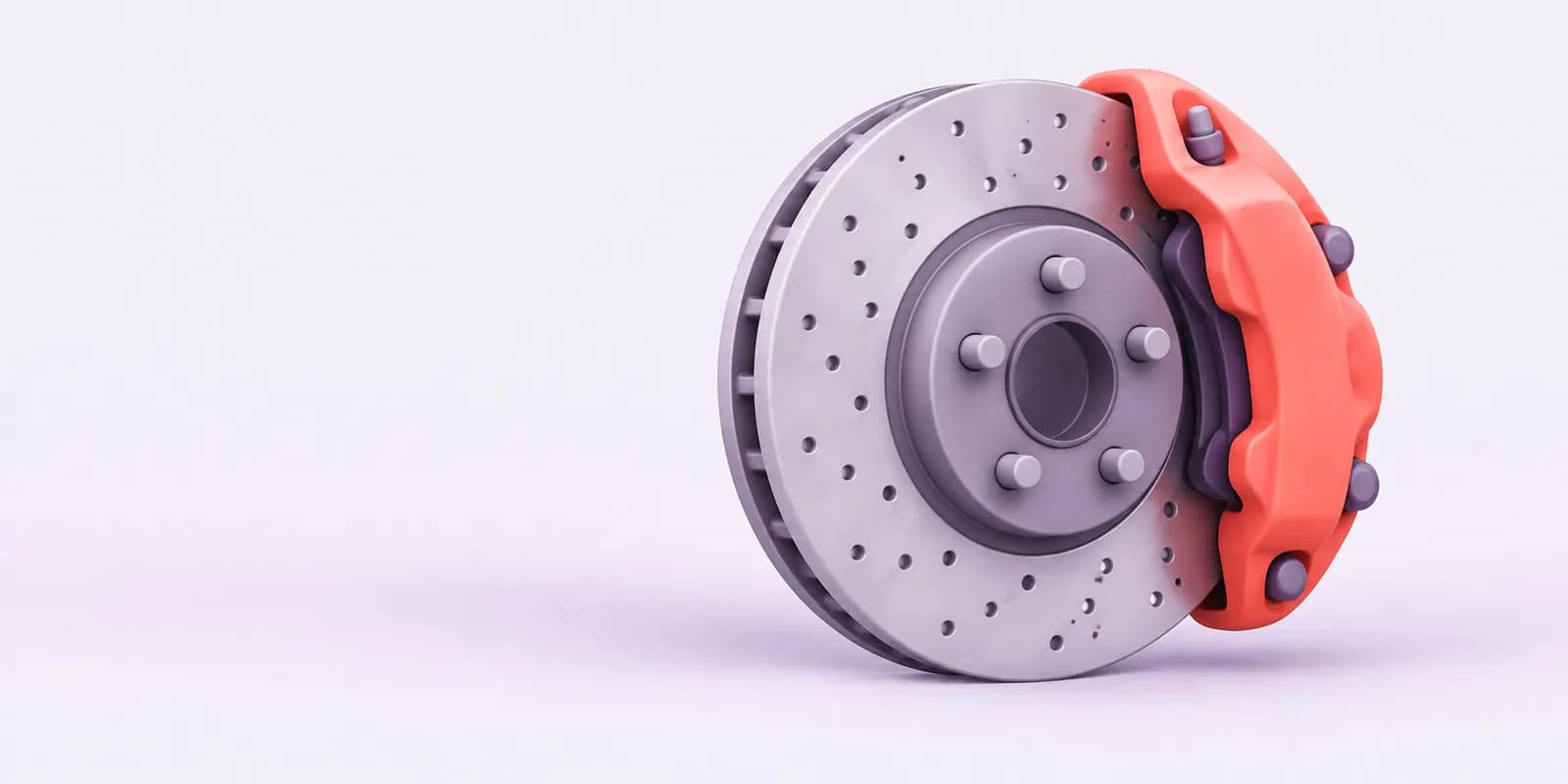
- Brake pads and discs
- Rigid brake pipes and flexible hoses
- The parking brake, often called the handbrake
- The brake fluid
- The ABS warning light and its sensors, and other brake warning lights

Testers give each fault a grade: dangerous, major, minor or advisory. The first two fail the car[6]. Our guide to minor, major and dangerous MOT faults explains each one. The stability control warning light is checked under a separate heading of the manual[5]. We cover it below because drivers think of it with the brakes.
Brakes come second only to tyres for the most serious MOT faults. These are DVSA’s figures for first-time MOTs: the first test of each MOT, not the retests that follow. They cover cars and light vans.
- 6.6%
- of first-time MOTs had a brake fault bad enough to fail the car
- A major or dangerous brake fault. DVSA MOT testing data, Table 03 (classes 3 and 4, initial tests), April 2024 to March 2025[7].
- 2.6%
- of first-time MOTs had a dangerous brake fault
- Same data and period.
- 29.0%
- of all dangerous faults were brake faults
- Only tyres, at 60.1%, had more. Same data and period.
Put another way, a brake fault that fails the car turned up in about 1 in 15 first-time MOTs (6.6%). A dangerous one turned up in about 1 in 40 first-time MOTs (2.6%). Our guide to tyres and the MOT covers the part with the most dangerous faults.
Efficiency is how hard the brakes pull, as a share of the car’s weight. Imbalance is the difference between the two wheels on one axle. The MOT system works out both figures for the tester[2].
| What is measured | The minimum |
|---|---|
| Service brake (the foot brake), cars first used on or after 1 September 2010, with brakes on four or more wheels | Efficiency of 58% Major (fails) if: Below 58% Dangerous if: Below half the minimum |
| Service brake, cars first used before that date | Efficiency of 50% Major (fails) if: Below 50% Dangerous if: Below half the minimum |
| Parking brake, most vehicles | Efficiency of 16% Major (fails) if: Below 16% Dangerous if: Below half the minimum |
| The two wheels on one axle | Each wheel at least 70% of the other’s best effort Major (fails) if: One wheel below 70% of the other Dangerous if: Below 50%, on a steered axle |
Limits from the MOT inspection manual, sections 1.2 and 1.4[2]. You may see 50% quoted for every car. That is the figure for cars first used before 1 September 2010.
Other things can fail on the rollers too. A wheel that brakes with too little effort is a major fault. A wheel with no braking effort at all is dangerous[2]. Other major faults are brakes that grab severely, respond slowly or don’t let go (bind). So are brakes that vary a lot with every turn of the wheel.
On a drive, you may notice some of these. The car may pull to one side, the brakes may feel jerky, or a wheel may seem to drag.
Pads press against the discs to slow the wheels. Both wear with use, so the manual sets clear lines for when wear becomes a fail.
| Part | Fault |
|---|---|
| Pads | Worn down to the wear indicator Grade: Major |
| Pads | Thinner than 1.5 mm Grade: Dangerous |
| Pads | Oil or grease on them Grade: Major |
| Pads | Missing, or fitted wrongly Grade: Dangerous |
| Discs | Significantly and obviously worn Grade: Major |
| Discs | Loose, fractured or likely to fail, or missing Grade: Dangerous |
| Discs | Oil or grease on them Grade: Major |
Grades from the MOT inspection manual, section 1.1[3].
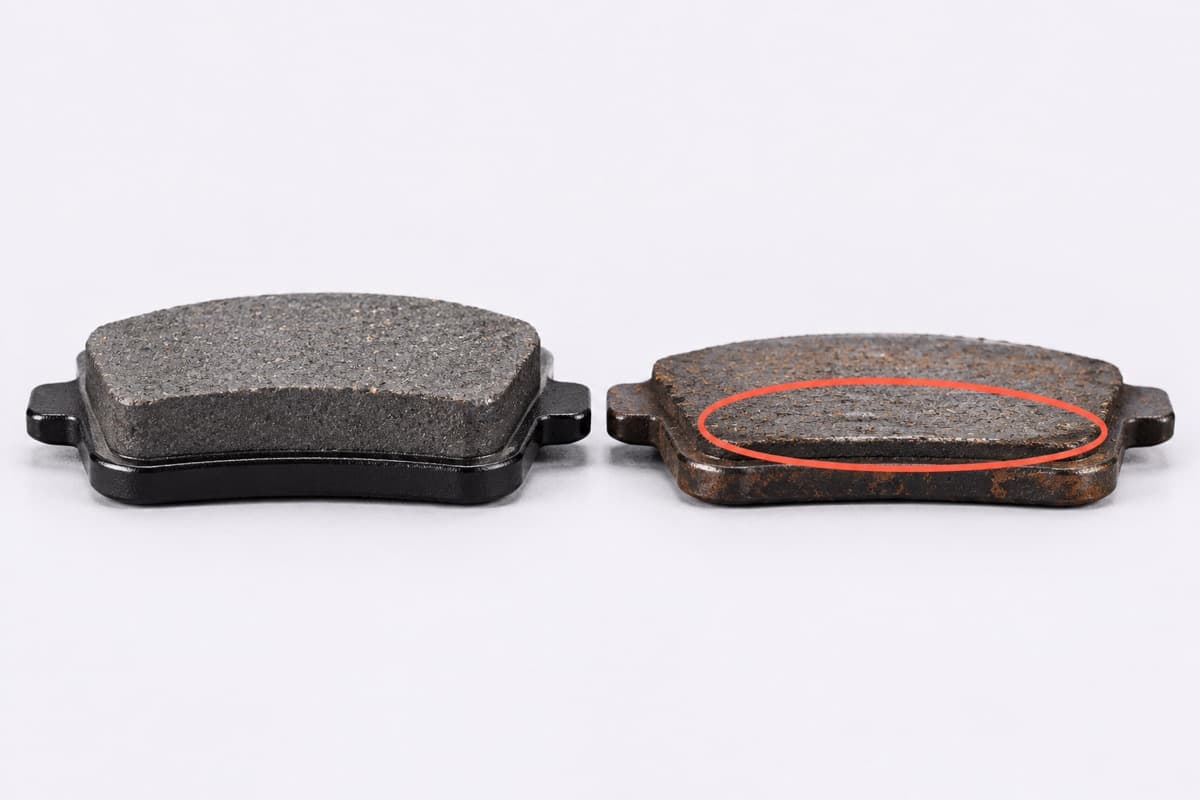
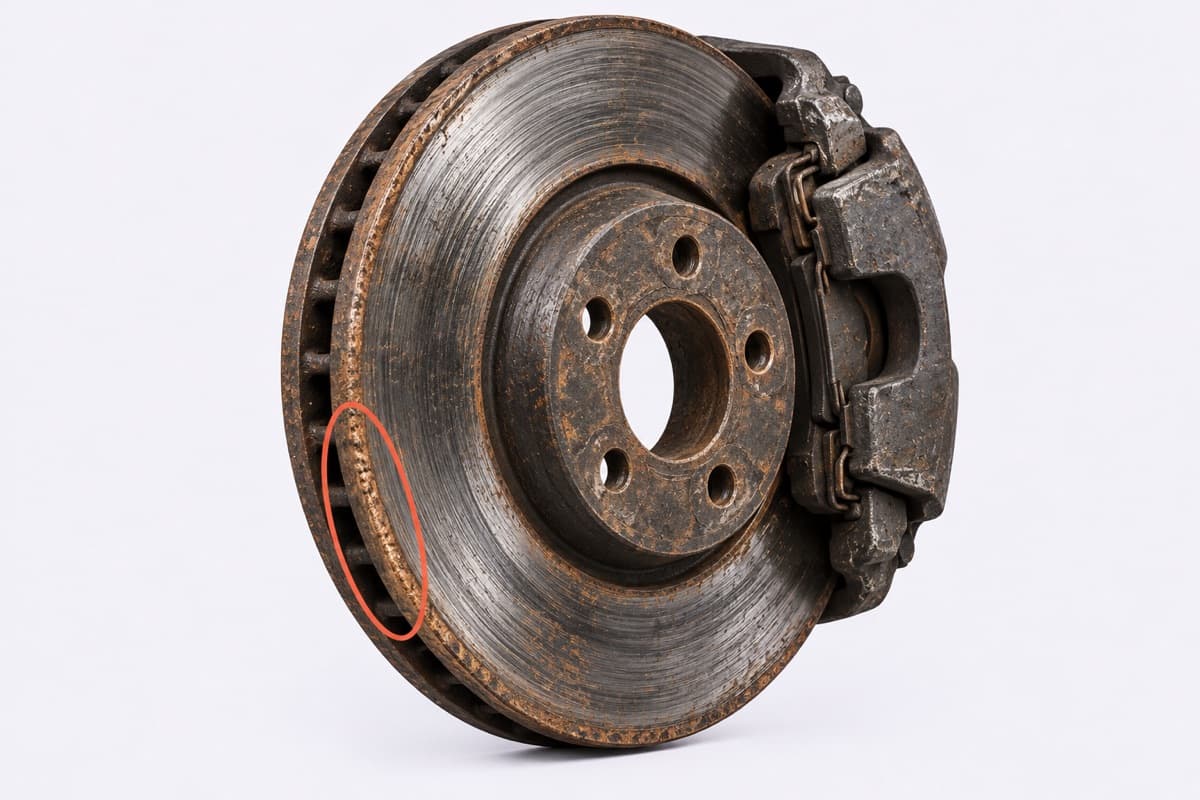
Pads that are wearing thin but still above those lines may get an advisory. So may discs that are worn, pitted or scored but not seriously weakened. An advisory means the car passes, with a note to keep an eye on it.
Myth
A lit brake pad wear light fails the MOT.
What's true
Not on its own. The manual says a lit pad wear light is not a failure[3].
Myth
Discs thinner than the maker’s minimum fail automatically.
What's true
Not by themselves. A disc fails when it is significantly and obviously worn, or loose, cracked or missing[3].
Myth
Pads fail at 3 mm.
What's true
The manual’s lines are the wear indicator (major) and 1.5 mm (dangerous). Some garages advise changing pads sooner, but that is advice, not an MOT rule.
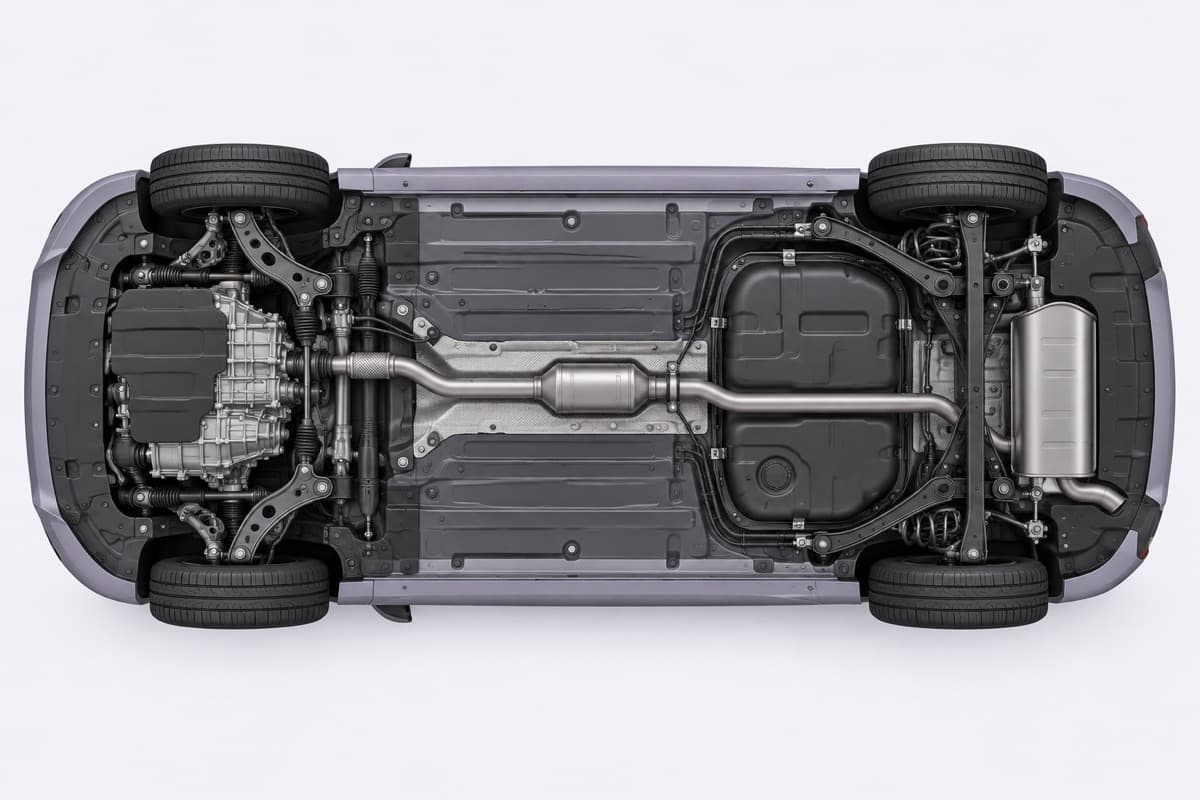
Brake pipes and hoses carry brake fluid to each wheel. The rigid metal pipes run along the underside of the car, where road spray and salt reach them.
| Part | Fault |
|---|---|
| Rigid pipe | Excessively corroded, or damaged Result: Major |
| Rigid pipe | Wall thinned by rust by about a third (roughly 0.25 mm on a typical pipe) Result: Major (counts as excessively corroded) |
| Rigid pipe | Leaking, or in imminent danger of breaking Result: Dangerous |
| Rigid pipe | Poorly clipped Result: Minor |
| Flexible hose | Bulging under pressure, or porous Result: Major |
| Flexible hose | Leaking Result: Dangerous |
| Flexible hose | End fittings badly corroded Result: Major |
| Flexible hose | Chafed so that the reinforcement shows Result: Major (counts as excessively chafed) |
| Flexible hose | Slightly chafed or twisted Result: Minor |
Results from the MOT inspection manual, sections 1.1.11 and 1.1.12[3].
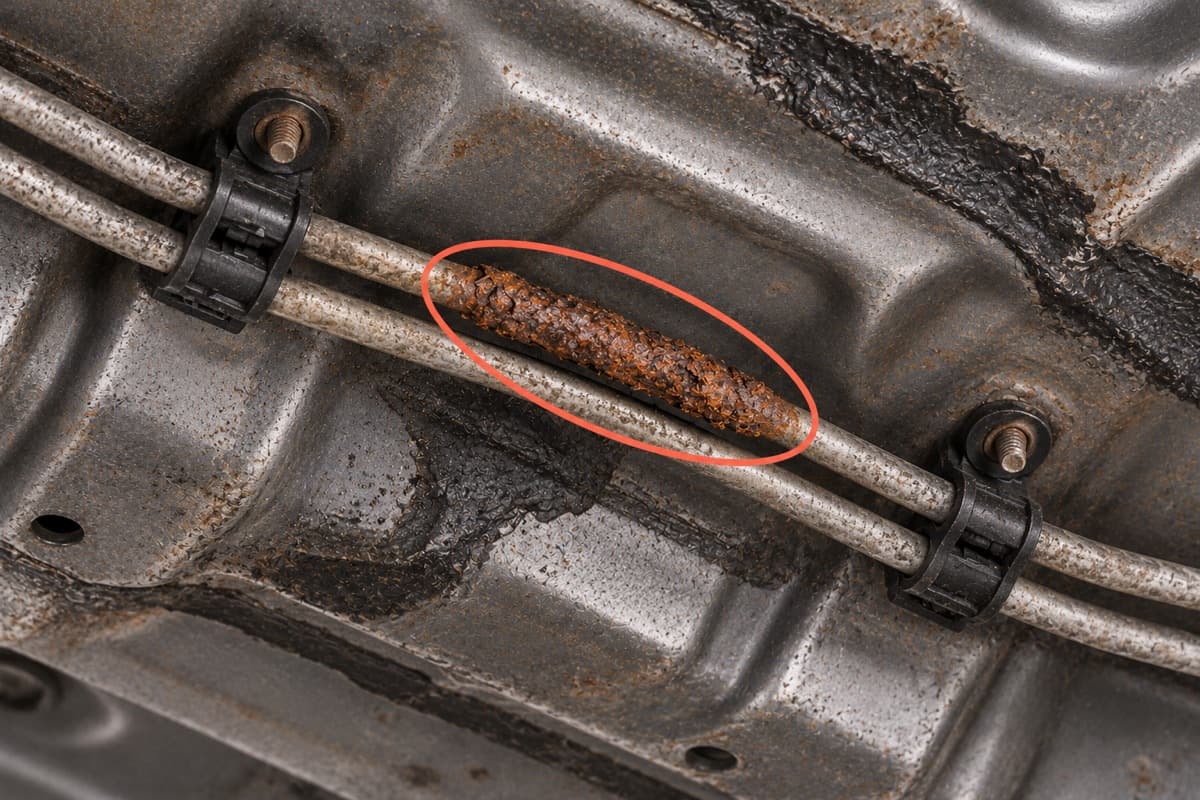
When the tester is unsure about a pipe, the manual tells them to give it the benefit of the doubt. They may lightly clean a pipe with a specialist tool, without damaging its coating[3].
The metal that holds the brakes counts too. Significantly weakened load-bearing structure within 30 cm of a brake mounting is a major fault. It is dangerous if braking is affected[3]. Our guide to rust and the MOT explains that rule.
- Age 7
- 1.3%
- Age 10
- 3.5%
- Age 12
- 5.6%
- Age 15
- 7.2%
- Age 17
- 10.2%
- Age 20
- 15%
All MOT-tested vehicles, 2025. Share of MOTs at that age where “brake pipe corroded or covered in grease” was recorded at any grade. At age 3 it was under 0.1%. About 90% of its records are advisories. MOT Wise analysis of DVSA MOT results, 2025.
Brake pipe notes are much more common at older ages. At age 7 the figure is about 1 in 75 MOTs (1.3%). At age 20 it is about 1 in 7 MOTs (15%) (MOT Wise analysis of DVSA MOT results, 2025).
The rest of the brake check covers the handbrake, the warning lights and the brake fluid.
| What the tester finds | In plain words |
|---|---|
| Parking brake lever: the ratchet doesn’t hold, or the lever travels too farGrade: Major | The lever will not stay applied, or has to be pulled too far. |
| Electronic parking brake warning light showing a faultGrade: Major | The system is reporting a fault. |
| ABS warning light not working, or showing a faultGrade: Major | The anti-lock system may not be working. |
| ABS wheel-speed sensors or wiring damagedGrade: Major | The anti-lock system cannot do its job. |
| ABS removed or disabled on a car first used on or after 1 January 2010Grade: Major | ABS cannot be taken off these cars. |
| Stability control (ESC) warning light showing a faultGrade: Major | The tester fails it only if sure the light means an ESC fault. |
| Brake fluid below the minimum markGrade: Minor | The car passes. The fault is on the record. |
| Brake fluid significantly below the minimumGrade: Major | The fluid is low enough to fail. |
| Brake fluid level not visibleGrade: Dangerous | The tester cannot see any fluid in the reservoir. |
| Brake fluid warning light lit or faultyGrade: Minor | The car passes. The fault is on the record. |
| Brake fluid contaminated (when clearly visible)Grade: Major | The fluid is dirty enough to fail. |
Grades from the MOT inspection manual, sections 1.1, 1.6, 1.8 and 7.12[3][4][5].
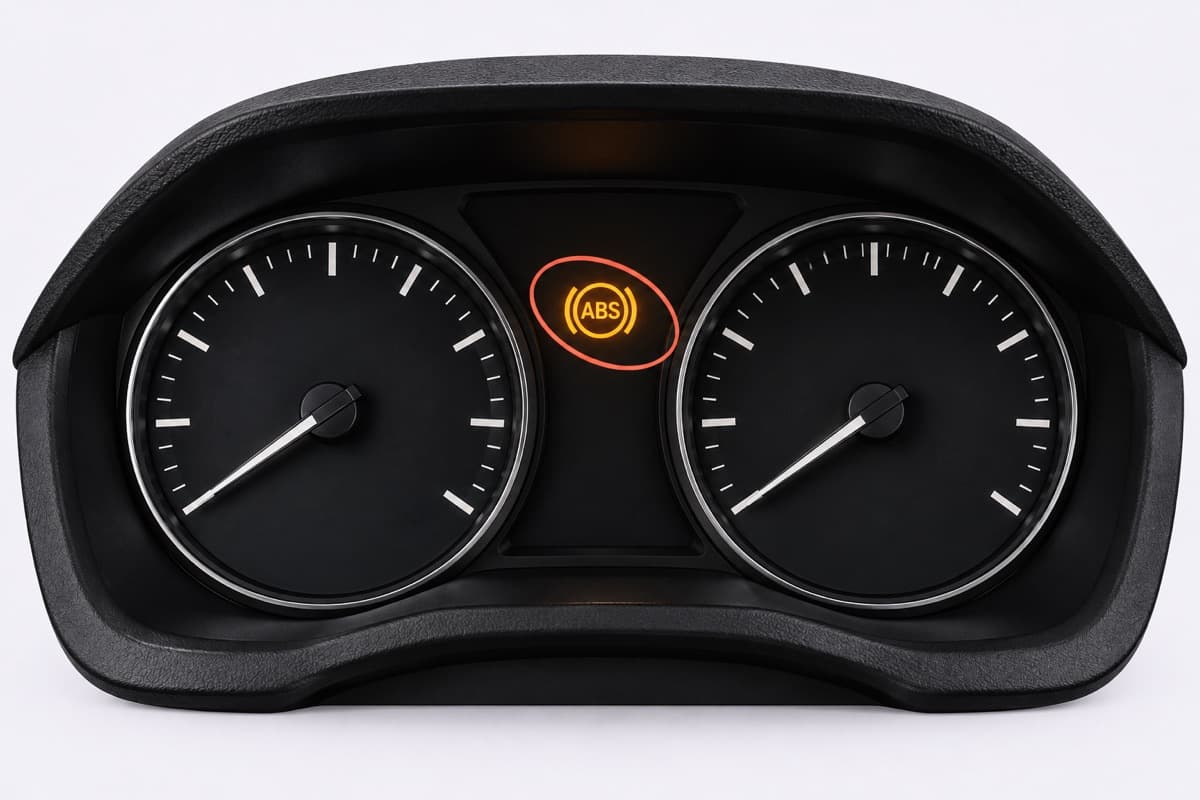
A lit light on the dashboard is worth a question when you’re viewing a car. Ask what it means and what was done about it.
Most of the commonest brake notes on a record are advisories. An advisory means the tester saw wear that hadn’t reached the point of failing. Here are the commonest brake notes across all MOT-tested vehicles (MOT Wise analysis of DVSA MOT results, 2025).
| What the tester wrote | What it means |
|---|---|
| Brake disc worn, pitted or scored, but not seriously weakened | The disc is marked by wear but not seriously weakened. MOTs where it was recorded: about 1 in 10 MOTs (9.3%) Advisory or fail? 98% advisory, 2% fail |
| Brake pads wearing thin | The pads are wearing down but are not at the point of failing. MOTs where it was recorded: about 1 in 12 MOTs (8.5%) Advisory or fail? 85% advisory, 15% fail |
| Brake pipe corroded or covered in grease | Rust or grease on a pipe that carries brake fluid. MOTs where it was recorded: about 1 in 20 MOTs (4.6%) Advisory or fail? 90% advisory, 10% fail |
| Brake disc worn, but not excessively | The disc is worn, but not enough to fail. MOTs where it was recorded: about 1 in 30 MOTs (3%) Advisory or fail? 86% advisory, 14% fail |
| Brake binding slightly | A brake that doesn’t let go fully after you lift off the pedal. MOTs where it was recorded: about 1 in 50 MOTs (2.2%) Advisory or fail? 74% advisory, 26% fail |
| Parking brake below requirements | The parking brake doesn’t hold as well as the rules ask. MOTs where it was recorded: about 1 in 75 MOTs (1.25%) Advisory or fail? Mostly fails (77%) |
All MOT-tested vehicles aged 3 and over, 2025. Each MOT is counted once if the note was recorded at any grade. The last column splits that note’s records. The same code covers the advisory and the fail, so the fail share is the serious version of each note. For pads, that means under 1.5 mm. Pads worn to the wear indicator are recorded under a separate code. “Advisory” includes faults fixed during the test. MOT Wise analysis of DVSA MOT results, 2025.
Pads wearing thin are noted most often around age 7: about 1 in 10 MOTs (10.2%). At age 17 that is about 1 in 12 MOTs (7.7%). Worn, pitted or scored discs are noted more often at older ages. At age 3 they were recorded in about 1 in 25 MOTs (4.1%). At age 17 it was about 1 in 8 MOTs (12%) (MOT Wise analysis of DVSA MOT results, 2025).
Pads and discs wear with use. If the record shows a pads fail followed by a pass, it can mean the pads were replaced. The record can’t show that, so ask for the invoice.
Brake pipes need a closer look on an older car. A pipe note on a car that is 10 or more years old is worth a question. Was a pipe replaced, or is it the same note as last year? The same brake note at test after test, with no repair, is worth asking about too. Our guide to MOT advisories explains how to read them.
A dangerous brake fault is the most serious grade. If the record shows one, ask what was done about it, who did the work, and for the paperwork.
Our test drive checklist covers the whole drive. These are the brake checks to add to it.
Brake checks on a test drive
0 of 9 done
Common questions
Is the handbrake tested in an MOT?
Yes. The parking brake must reach an efficiency of at least 16% for most vehicles, measured on the brake tester. The lever must also hold and not travel too far. An electronic parking brake with a fault light showing is a major fault.
Will worn brake pads fail an MOT?
Pads worn down to the wear indicator are a major fault, and pads thinner than 1.5 mm are dangerous. Pads that are wearing thin but still above those lines may get an advisory.
Will worn or scored brake discs fail an MOT?
A disc fails when it is significantly and obviously worn, or loose, cracked or missing. Being thinner than the maker’s minimum is not a reason on its own. Lighter wear may be noted as an advisory.
Does an ABS warning light fail an MOT?
Yes. An ABS warning light that doesn’t work or shows a fault is a major fault, and the car fails. A stability control warning light showing a fault is also major.
Does the MOT test brake efficiency?
Yes. A brake tester measures how hard each wheel brakes. Cars first used on or after 1 September 2010 need a service brake efficiency of at least 58%. Older cars need 50%.
Sources
- MOT inspection manual: Introduction, 14 Inspection procedure. DVSA, 2026.
- MOT inspection manual: 1.2 to 1.4 Brake performance and efficiency. DVSA, 2026.
- MOT inspection manual: 1.1 Brakes, condition and operation. DVSA, 2026.
- MOT inspection manual: 1.6 to 1.8 ABS, EBS and brake fluid. DVSA, 2026.
- MOT inspection manual: 7.12 Electronic stability control. DVSA, 2026.
- MOT rule changes: 20 May 2018. GOV.UK (DVSA), 2018.
- MOT class 3 and 4 vehicles: initial failures by defect category (DVSA/MOT/03). DVSA, 2026. Cars and light vans, first tests only, April 2024 to March 2025.