In short
- In 2025, about 1 in 4 failure records (24.8%) among the commonest MOT faults were checks you can do at home. A failure record is a fault written down as a fail. This is MOT Wise analysis of DVSA MOT results, 2025, for all MOT-tested vehicles.
- Check every light, the number plates, the wipers and washers, the windscreen, the tyres and the warning lights.
- Tyre tread must be at least 1.6 mm across the middle three-quarters of the tyre, all the way round[2].
- A lit airbag or stability control warning light that shows a fault is a major defect, so the car fails[3]. So does an engine warning light on petrol cars first used from July 2003 and diesels from July 2008[4].
- Bulbs, wipers and tyres fixed and rechecked at the same centre by the end of the next working day are free to retest[5].
On this page
- What can you check yourself before an MOT?
- The MOT checklist: 12 things to check
- Lights, bulbs and number plates
- Tyres: tread depth and condition
- Wipers, washers and the windscreen
- Warning lights that fail an MOT
- Which simple checks fail an MOT most often?
- What you can’t check yourself
- Before you arrive: things that can stop the test
- If you find a problem
- Common questions
- Sources
The MOT is the yearly check that a car is safe and fit for the road. It looks at lights, tyres, wipers and much more. It doesn’t test the engine, clutch or gearbox, and it isn’t a service[1].
Some of what fails is simple, and you can spot it before you go. Fixing those things first can save you a failed test and a second trip.
- 24.8%
- of failure records among the commonest MOT faults were six simple checks you can do yourself. They are bulbs, wipers, washer fluid, number plates, the horn and tyre tread.
- Failure records (major or dangerous faults) among the 100 commonest items recorded at each age. All MOT-tested vehicles aged 3 and over, 2025. MOT Wise analysis of DVSA MOT results, 2025.
- 19.5%
- when tyre tread is left out, which leaves bulbs, wipers, washer fluid, number plates and the horn.
- Same measure, without tyre tread.
- 34%
- at 3 years old. The share falls to 25% at 10 years and 20% at 20 years.
- Same measure, by age of vehicle.
A failure record is one fault written down as a fail. One MOT can have several, so these figures don’t say how many failed MOTs had a simple cause. They do show that, among the commonest items, about 1 in 4 failure records (24.8%) came from checks anyone can do. This is MOT Wise analysis of DVSA MOT results, 2025.
For wider context, DVSA’s figures for first-time tests show about 3 in 10 initial tests (28.1%) failed in the year to March 2025. That counts cars and light vans, first tests only, so retests aren’t included[6].
Go round the car once with this list. It takes a few minutes, and a helper makes the lights easier.
Before you take the car in
0 of 12 done
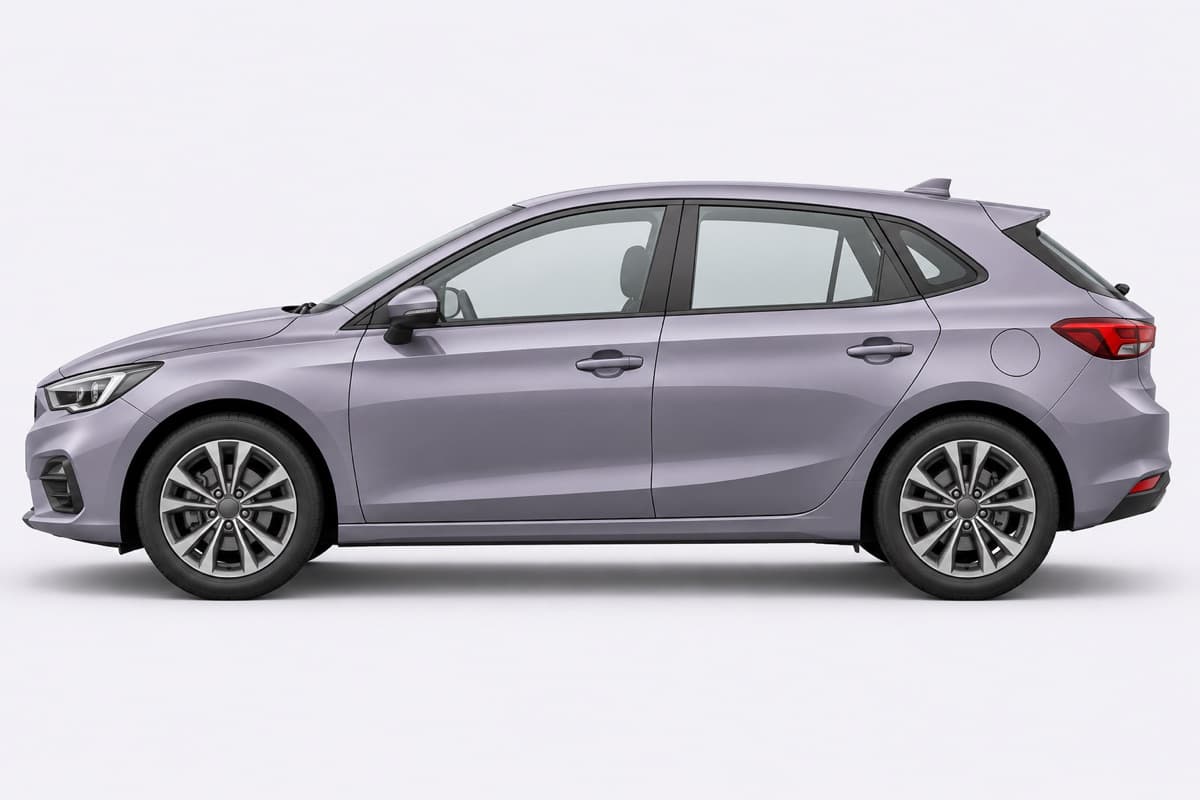
The tester checks that each light is in good condition and works. That includes LED lights. They also check the headlamp aim, the headlamp cleaning and levelling, and the main beam warning light[1].
Switch on the sidelights
Walk round the car and check the front and rear lights, and the number plate lights.
Try dipped and main beam
Check both headlamps on each setting. The main beam warning light on the dashboard should work too.
Check the indicators and hazards
Look at the front, side and rear indicators. The hazard lights use all of them at once.
Press the brake pedal
A helper at the back can tell you whether both brake lights come on.
Select reverse
With the ignition on and reverse selected, a helper can check the reversing lights.
One number plate light out of two or more is a minor defect. It doesn’t fail the car on its own. If the only one is out, or all of them are, the car fails. A dipped headlamp, sidelight or brake light that’s out can fail it. Headlamp aim is hard to check at home, so that one is for the test centre.
Number plates fail the test (as a major defect) if they are missing, insecure, hard to read or show the wrong registration. On cars made since 1980, the front plate has black letters on white and the rear plate black letters on yellow. The size, spacing and font must be correct[7].
Tints, films or fixings that change how the characters look aren’t allowed. On cars first registered from 1 September 2021, the lettering must be a single shade of black. Peeling or damaged plates can also stop traffic cameras reading them[7].
Our guide to lights and the MOT covers each light in more detail.
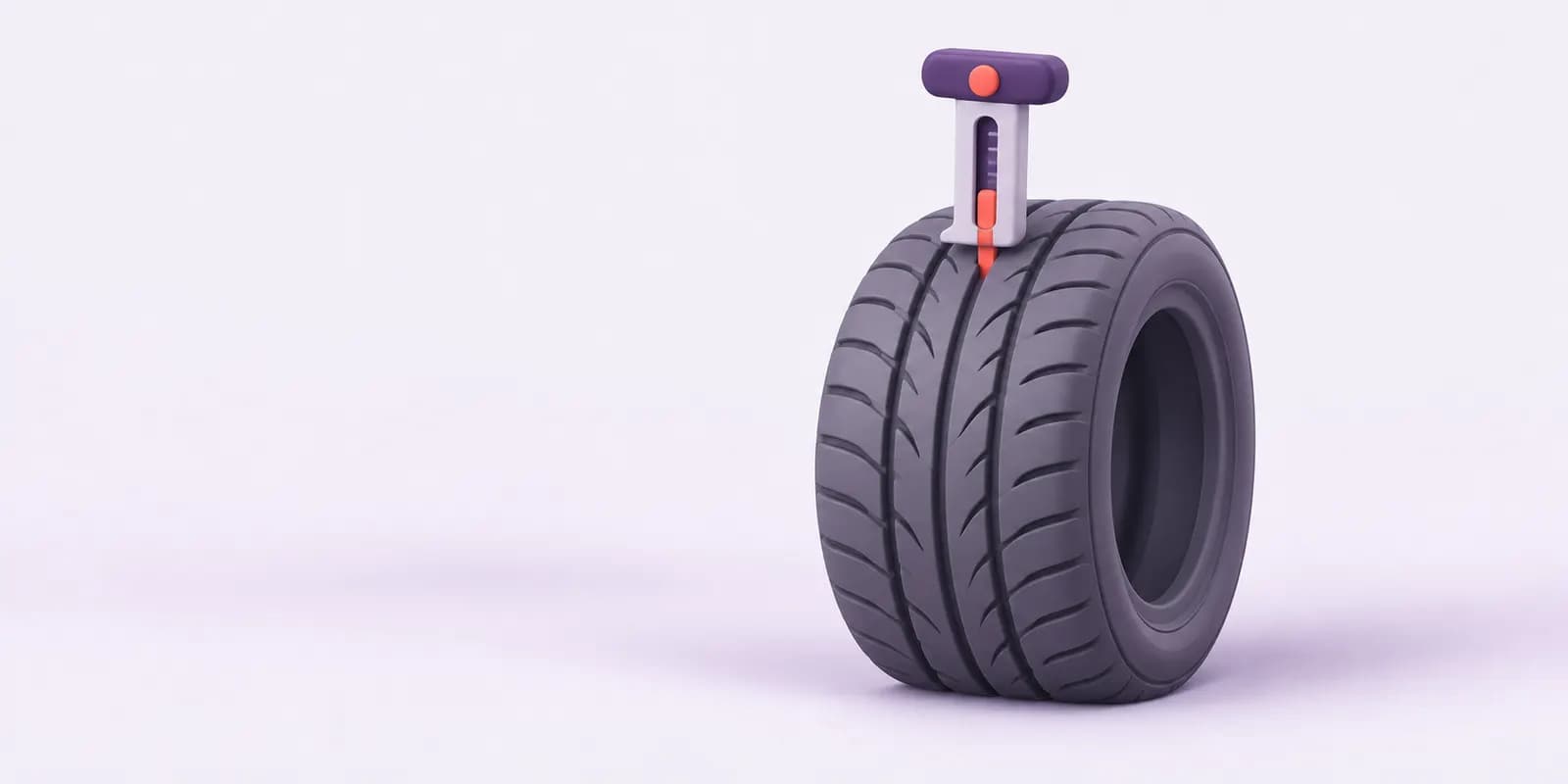
The legal minimum tread depth is 1.6 mm. The tester measures across the central three-quarters of the tread, all the way round the tyre[2]. A tread depth gauge, which reads in millimetres, is the easy way to check.
Tread below the legal depth is graded dangerous. So is a bulge or lump caused by damage inside the tyre. A dangerous problem means the car cannot be driven away until it is repaired[11]. This is general information, not legal advice.
A cut deep enough to reach the cords (the strong threads inside the tyre) is graded major. So is fitting different-sized tyres on the same axle[2].
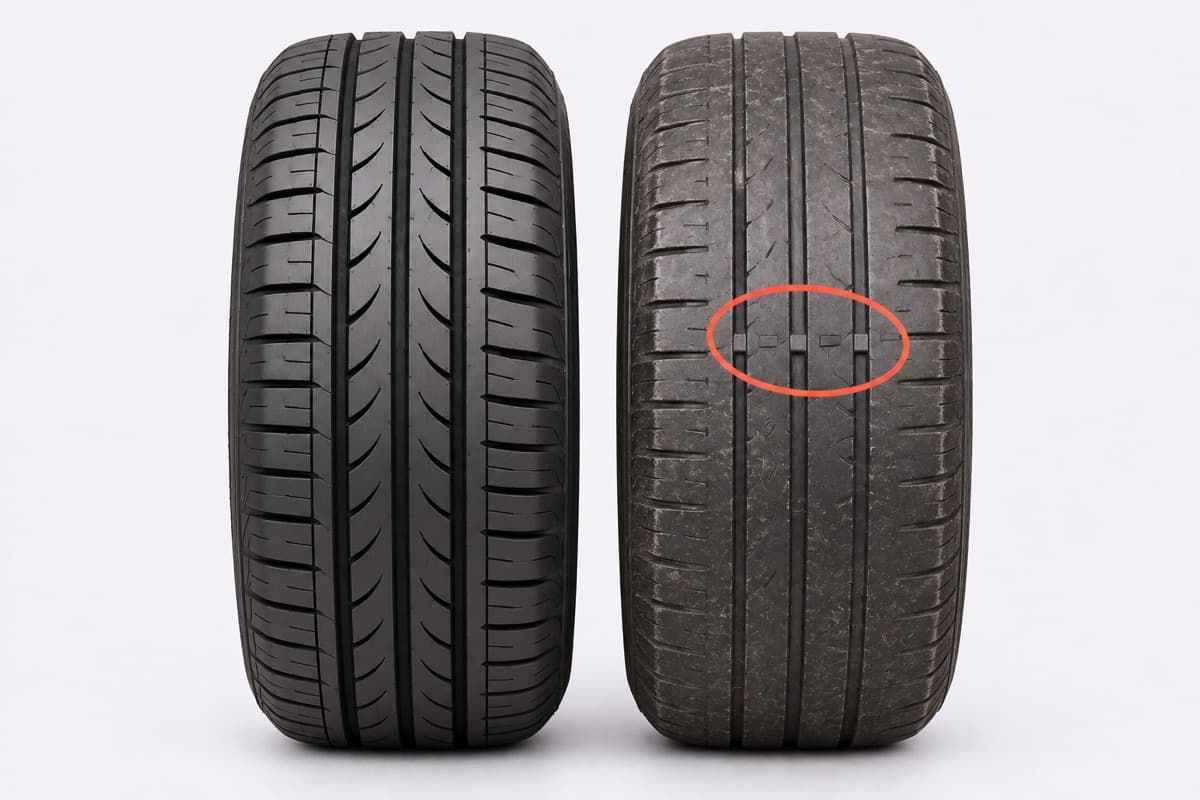
Tyres cause most dangerous defects. In DVSA’s first-time tests to March 2025, tyres made up 60.1% of all dangerous defects. A dangerous tyre defect turned up in about 1 in 20 initial tests (4.7%)[6].
Check the tyre sides for cuts, bulges and cracks as well as the tread, and check the pressures. Our guide to tyres and the MOT has more.
A wiper that doesn’t work, or is missing, is a major defect. So is a blade that clearly fails to clear the screen. A worn or damaged blade is minor. Washers that don’t work, or don’t give enough fluid, are major too[8].
Chips and cracks get a closer look in two cases. One is damage bigger than 10 mm in the area straight in front of the driver. The manual calls it Zone A: 290 mm wide and centred on the steering wheel. The other is damage bigger than 40 mm elsewhere in the area the wipers sweep[8].
Even then, damage only fails the car if it significantly affects the driver’s view. A repaired windscreen is judged only on whether the repair gets in the way of the driver’s view[8].
Anything that significantly blocks the driver’s view through the area the wipers sweep is a major defect. A sat nav or air freshener in the wrong place is one example. The tester may remove such items and tell you[8].
Damage that still lets the driver see clearly is recorded as a minor defect, which doesn’t fail the car. It shows up in about 1 in 40 MOTs (2.9%). That is all MOT-tested vehicles aged 3 and over (MOT Wise analysis of DVSA MOT results, 2025).
A lit airbag light or stability control light (the system that helps stop skids) that shows a fault is a major defect[3]. An engine warning light that shows a fault is major too, on petrol cars first used from July 2003 and diesels from July 2008[4]. A major defect fails the car.
On cars first used from 1 January 2012, a faulty tyre pressure monitoring system is also a major defect. If it is unclear whether the tyre pressure light means a fault, the tester can add an advisory instead[2].
When these lights are recorded, most of the records are fails. The airbag light is 78%, tyre pressure 79%, stability control 95% and the engine light 81% to 83%. The rest are advisories or faults put right during the test. These figures cover all MOT-tested vehicles aged 3 and over, all ages together (MOT Wise analysis of DVSA MOT results, 2025).
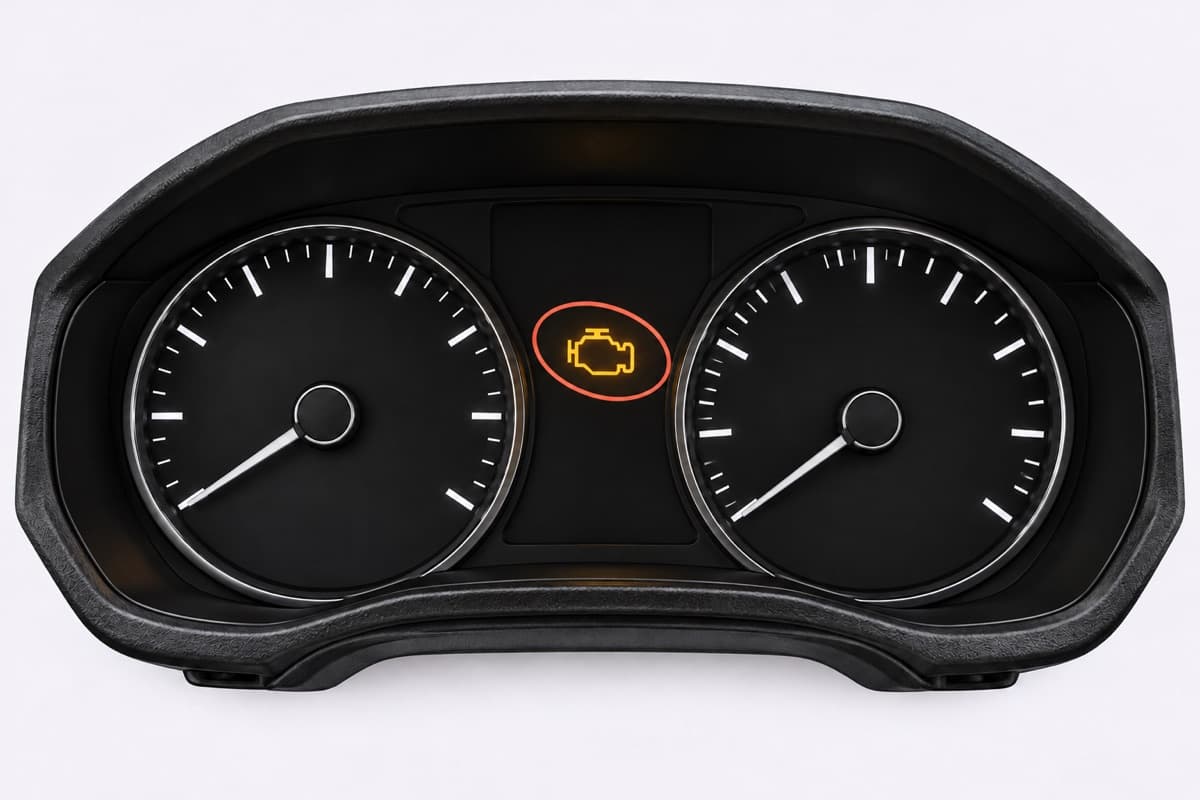
A light only tells you something is wrong, not what. One that stays on is worth a garage visit before the test, not after it.
Two sets of figures help here. DVSA’s cover first-time tests. Ours cover MOTs on vehicles aged 3 and over in 2025. We keep them apart. First, DVSA’s view of which areas fail.
- Lights and electrical
- 10.9%
- Suspension
- 8.7%
- Brakes
- 6.6%
- Tyres
- 6.4%
- Visibility (wipers, washers, glass)
- 4.5%
- Body and structure
- 3.4%
- Noise, emissions and leaks
- 3.2%
- Steering
- 2%
DVSA MOT testing data for Great Britain, Table 03 (classes 3 and 4, cars and light vans), initial tests only, April 2024 to March 2025. A test can fail in more than one area, so the bars don’t add up to the overall fail rate[6].
Lights, wipers and glass, plates and vehicle numbers, and tyres make up 46.4% of all failing faults in those tests. That is our sum of DVSA’s figures. It is an upper limit for what an owner can fix. Those groups also hold things you can’t check at home.
Here is how often some simple checks are recorded in our figures, and how many of those records are fails.
| Check | MOTs with it recorded | Of those records, fails |
|---|---|---|
| Position lamp (sidelight or rear light) not working | about 1 in 50 MOTs (2%) | 71% |
| Brake light not working | about 1 in 50 MOTs (1.9%) | 51% |
| Headlamp not working on dipped beam | about 1 in 75 MOTs (1.2%) | 68% |
| Washer not giving enough fluid | about 1 in 50 MOTs (1.8%) | 68% |
| Wiper does not clear the windscreen | about 1 in 75 MOTs (1.5%) | 73% |
| One number plate light not working | about 1 in 30 MOTs (3.3%) | 0% (recorded as minor) |
| Number plate worn but still readable | about 1 in 40 MOTs (2.9%) | 3% |
| Horn not working | about 1 in 300 MOTs (0.3%) | 90% |
| Tyre worn close to the legal limit | about 1 in 5 MOTs (18.8%) | 8% |
MOT Wise analysis of DVSA MOT results, 2025. MOT-tested vehicles aged 3 and over, all ages together. Counts MOTs at which the item was recorded at any level. The rest of the records are advisories, minor defects, or faults put right during the test.
Look at the last row. A tyre close to the limit is common, but only 8% of those records are fails. A horn that doesn’t work is rare, but when it is recorded, 90% of the records are fails. This is MOT Wise analysis of DVSA MOT results, 2025.
For the position lamp, brake light, headlamp, wiper and washer rows, most of the records are fails (51% to 73%). Faults put right during the test count as passes, so they aren’t in the fail figures. The data can’t say how many there were. This is MOT Wise analysis of DVSA MOT results, 2025.
Our guide to the most common MOT failures has more on what fails, and when.
Some of the commonest reasons for a fail need a ramp or test equipment. The tester measures how well the brakes work with an efficiency test, and also checks the steering and suspension[1].
You can check at home
- Lights, number plates and the horn
- Tyre tread and condition
- Wipers, washers and the windscreen
- Mirrors and seat belts
- Warning lights on the dashboard
- Fluid levels
Needs a garage or test equipment
- How well the brakes work
- Worn suspension joints, bushes and shock absorbers
- Play in the steering
- Rust underneath, on brake pipes, springs and the body structure
- Headlamp aim
- Exhaust gas readings
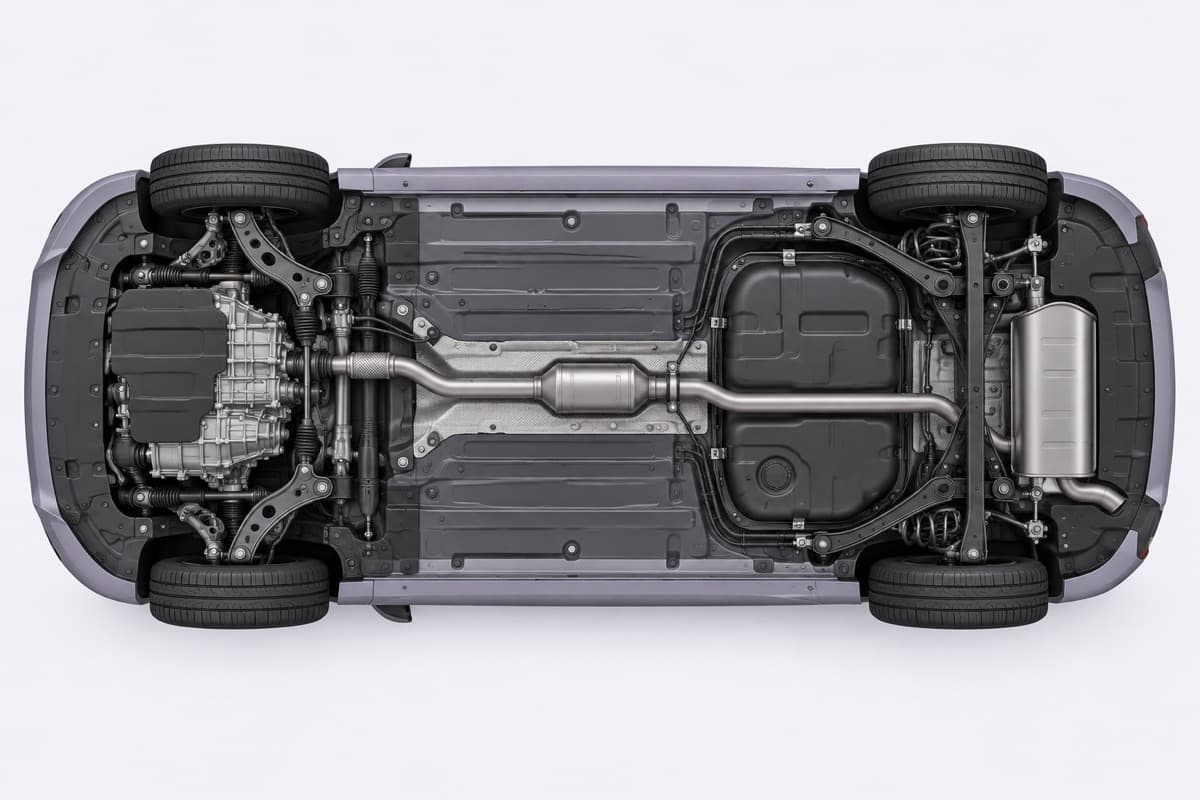
You can still spot warning signs. Listen for grinding or squealing when you brake, notice if the car pulls to one side, and listen for knocks over bumps. If you notice any, get it looked at before the test.
The same list works at a viewing. Lights, tyres, wipers and warning lights are quick to check on a used car. The buying checklist covers the rest, and the MOT record can show what testers found on the parts you can’t see.
A tester can refuse to test a car, and must give back any fee, in these cases[9]. Check them before you go.
- The car is so dirty that it’s hard to examine.
- It doesn’t have enough fuel or oil to be driven.
- A load stops a proper test.
- The fuel cap, boot, bonnet or doors won’t open easily. Have the fuel cap key to hand.
- It gives off avoidable smoke.
- Neither the number plate nor the vehicle identification number (VIN) can be read.
- The tester can’t tell when the car was first used. This usually only comes up with a personalised plate, when they may ask for the V5C (the logbook, which is the registration document).
GOV.UK suggests regular checks on every car. Keep the windscreen, windows and mirrors clean, and make sure the lights and brakes work. Then check oil, coolant, brake fluid, battery, washer fluid and tyres[10].
If you drive a diesel, DVSA advises arriving with a fully warmed-up engine and not tampering with the governor settings. The tester can refuse the smoke test if it might damage the engine[1]. Our guide to diesel cars and the MOT has more.
Fix the quick things first
A bulb, a wiper blade, washer fluid or a loose number plate are all simple jobs.
Get a garage to look at the rest
For brakes, suspension, steering or a warning light, a garage can tell you what’s wrong before the test.
Or go for the test and repair afterwards
If the car fails, you can have it repaired and retested. The rules are in the next paragraphs.
Leave the car at the test centre for the repair, and it is retested within 10 working days at no charge. Take it away and bring it back within 10 working days, and a partial retest fee may be charged. After that, you need a full retest[5].
Some items are free to recheck if you return to the same test centre by the end of the next working day. Among them are the ones you can fix at home:
- Lights (but not headlamp aim)
- Wipers and washers
- Mirrors
- Number plates
- Seat belts (but not where they are fixed to the car)
- Wheels and tyres
- The horn
- The tyre pressure monitoring system
Brakes, suspension, exhaust emissions and headlamp aim are not on that list[5]. Our guides to how MOT retests work and how much an MOT costs have the details.
Common questions
What do I need to check before an MOT?
Check the lights, number plates, tyres, wipers and washers, windscreen, mirrors, horn, seat belts and dashboard warning lights. Make sure the car has enough fuel and oil and is clean enough to examine.
What is the minimum tyre tread depth for an MOT?
The legal minimum is 1.6 mm. It applies across the central three-quarters of the tread, all the way round the tyre. Tread below that is graded dangerous.
Can a windscreen chip fail an MOT?
It can. Damage bigger than 10 mm straight in front of the driver gets a closer look. So does damage bigger than 40 mm elsewhere in the area the wipers sweep. It only fails if it significantly affects the driver’s view.
Can I fail an MOT for a warning light?
Yes. An airbag or stability control warning light that shows a fault is a major defect, so the car fails. So is an engine warning light on petrol cars first used from July 2003 and diesels from July 2008. A faulty tyre pressure monitoring system is also major on cars first used from 1 January 2012.
Is an MOT retest free?
It can be. If you leave the car at the test centre for repair, the partial retest within 10 working days is free. Some simple items, such as bulbs and wipers, are free to recheck too. Return to the same centre by the end of the next working day.
Sources
- Car parts checked at an MOT. DVSA, 2015.
- MOT inspection manual: 5.2.3 Tyres. DVSA, 2026.
- MOT inspection manual: 7. Other equipment. DVSA, 2026. Used for the airbag and stability control warning lights.
- MOT inspection manual: 8. Nuisance. DVSA, 2026. Used for the engine warning light.
- Getting an MOT: Retest after a repair. GOV.UK.
- MOT testing data for Great Britain (Table 03: initial failures by defect category). DVSA. Figures for April 2024 to March 2025, classes 3 and 4.
- MOT inspection manual: 0. Identification of the vehicle. DVSA, 2026. Used for number plates.
- MOT inspection manual: 3. Visibility. DVSA, 2026. Used for wipers, washers and the windscreen.
- MOT inspection manual: Introduction (reasons to refuse to test). DVSA, 2026.
- Check your vehicle is safe to drive. GOV.UK.
- Getting an MOT: MOT test result. GOV.UK.