In short
- A diesel gets the usual checks plus a smoke test, where a meter measures the smoke from a warm, revved engine[1].
- If the car has a diesel particulate filter (DPF), visible smoke of any colour is a major fault. So is a missing or tampered filter[1].
- A car built with a DPF fails its MOT if the filter is missing[1]. Whether driving one without its filter is illegal depends on the car’s age. The rules are under review (as of 10 October 2026)[4].
- The engine warning light is checked on diesels first used from 1 July 2008. One that doesn’t work, or shows a fault, is a major fault[1].
- In MOT Wise’s 2025 figures, 15.5% of diesel cars first used in 2021 or 2022 failed their first MOT. For petrol cars it was 10.2%.
On this page
- What is different about a diesel MOT?
- How the diesel smoke test works
- Diesel particulate filters (DPFs) and the MOT
- Smoke and the engine warning light
- Do diesel cars fail their MOT more often than petrol cars?
- Where diesels stand out: the engine warning light
- Buying a used diesel: what to ask and check
- Common questions
- Sources
The MOT is the yearly check that a car is safe and fit for the road. Most of it is the same for every car: brakes, tyres, lights and steering. The exhaust is where a diesel is treated differently.
A diesel gets a smoke test, also called an opacity test. A meter measures how much light the exhaust smoke blocks. A petrol car gets a gas test instead[1]. The testers’ official manual comes from DVSA, the government agency that runs the MOT.
Faults are graded. A major fault could affect safety or the environment, and the car fails until it is fixed. A dangerous fault is a direct risk to road safety. The car fails, and it is against the law to drive it until it is fixed[6][7].
| What the tester checks | What happens |
|---|---|
| Smoke from the exhaust | A meter measures it while the tester revs a warm engine If it goes wrong: Major, if over the limit |
| The particulate filter (DPF) | The tester checks it is there, if the car was built with one, and looks for tampering If it goes wrong: Major |
| Visible smoke on a car with a DPF | The tester looks for smoke during the test If it goes wrong: Major, whatever the colour |
| Smoke so heavy it hides other road users | Seen during the test If it goes wrong: Dangerous |
| The engine warning light | Switched on to see that it lights, then goes out. Diesels first used from 1 July 2008 If it goes wrong: Major, if it doesn’t work or shows a fault |
Grades from the MOT inspection manual[1].
Diesel hybrids skip the smoke test. They still get the warning light check[1].
This part of the test is only for diesels. For any diesel first used on or after 1 January 1980, the tester follows the same steps[1]. Older ones get a visual check for smoke instead.
Warm the engine
The engine has to be fully warmed up: at least 80 degrees C, or its normal working temperature.
Hold the revs
The tester runs the engine at about 2,500 revs a minute (or half the engine’s maximum speed, if that is lower) for 30 seconds.
Take the readings
With a probe in the tailpipe, the tester presses the accelerator quickly, up to six times. The meter measures the smoke each time.
Compare with the limit
The car passes if the first reading is 60% or less of the limit. It also passes if the average of the first three readings, or of any three in a row, is within the limit.
The limit comes from the maker’s plate on the car. If there isn’t one, the manual’s default limits apply. They depend on when the car was first used, and the unit is “per metre”. The lower the number, the less smoke is allowed.
| Car first used | Smoke limit (per metre) |
|---|---|
| Before 1 July 2008 | 2.5 for engines without a turbo, 3.0 for turbo engines |
| 1 July 2008 to 31 December 2013 | 1.5 |
| From 1 January 2014 | 0.7 |
Used when the maker’s plate gives no limit. The tester adds 0.05 to the plate value, to allow for manufacturing tolerances[1].
The limit that applies is the one for the car’s first-use date, not the year of the test. So a newer diesel has to pass a much tighter limit than an older one.
A diesel particulate filter, or DPF, is a filter in a diesel car’s exhaust. It traps solid particles (soot) from the exhaust gases[2].
Since February 2014, the MOT exhaust check has included making sure the filter is there, if the car was built with one[2]. The tester also looks for signs of tampering. These are all major faults[1]:
- A filter that is missing, obviously modified or obviously defective.
- Signs the filter has been tampered with. For example, one cut open and welded shut again, unless the owner can show a good reason, such as cleaning.
- Any other emission equipment the maker fitted that is missing.
The MOT record shows what the tester found on each test day. It can’t show what has happened since. If you are not sure about a used diesel, ask the seller about the filter, and a garage can look at it.
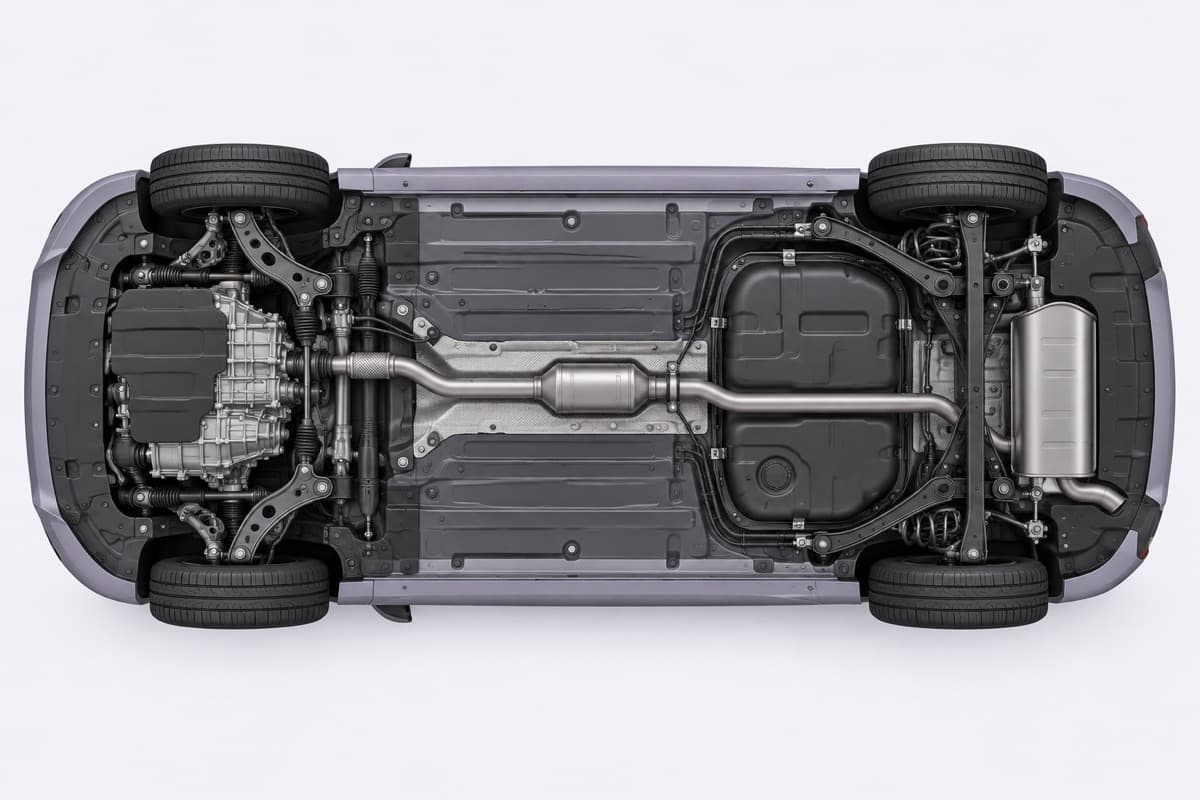
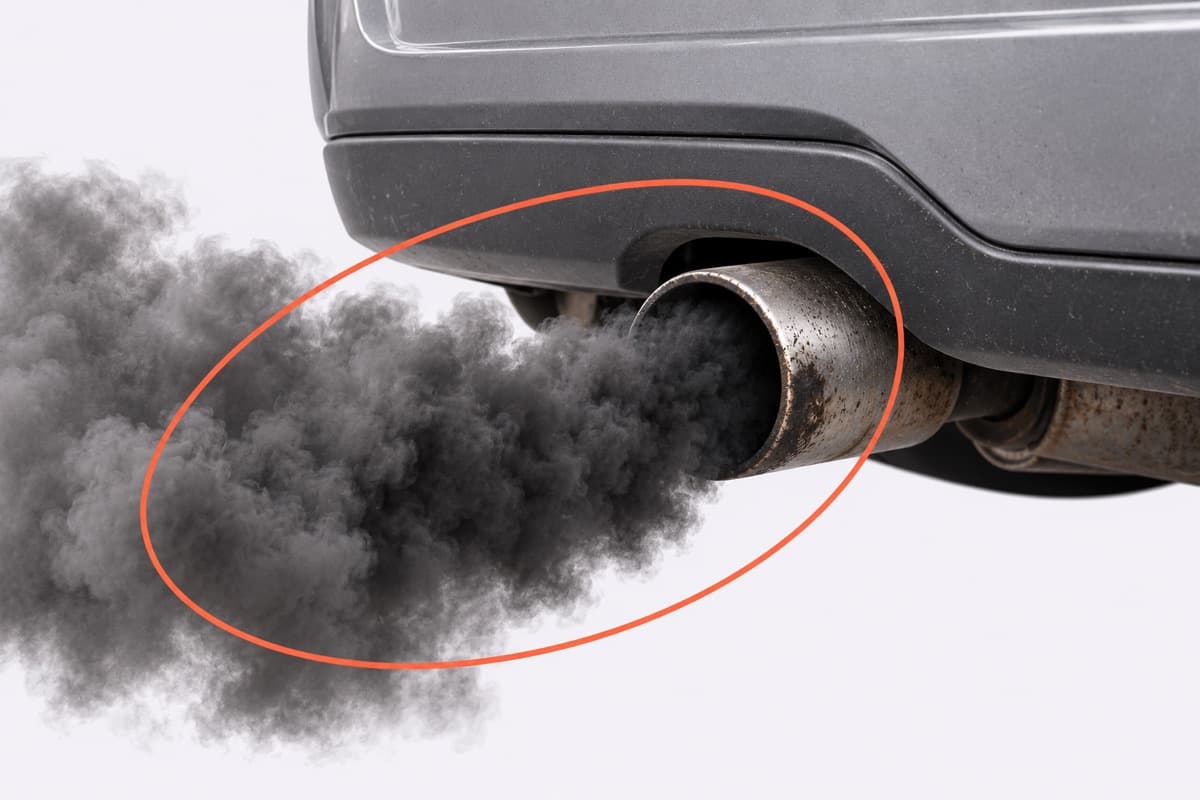
During the smoke test, a reading over the limit is a major fault. Smoke so heavy it is likely to hide other road users from view is dangerous[1]. On a car with a DPF, any visible smoke counts, whatever its colour.
The engine warning light is a separate check. On diesels first used from 1 July 2008, the tester turns the ignition on. The light should come on, then go out. A light that doesn’t work, or shows a fault, is a major fault. This covers diesel hybrids too[1].
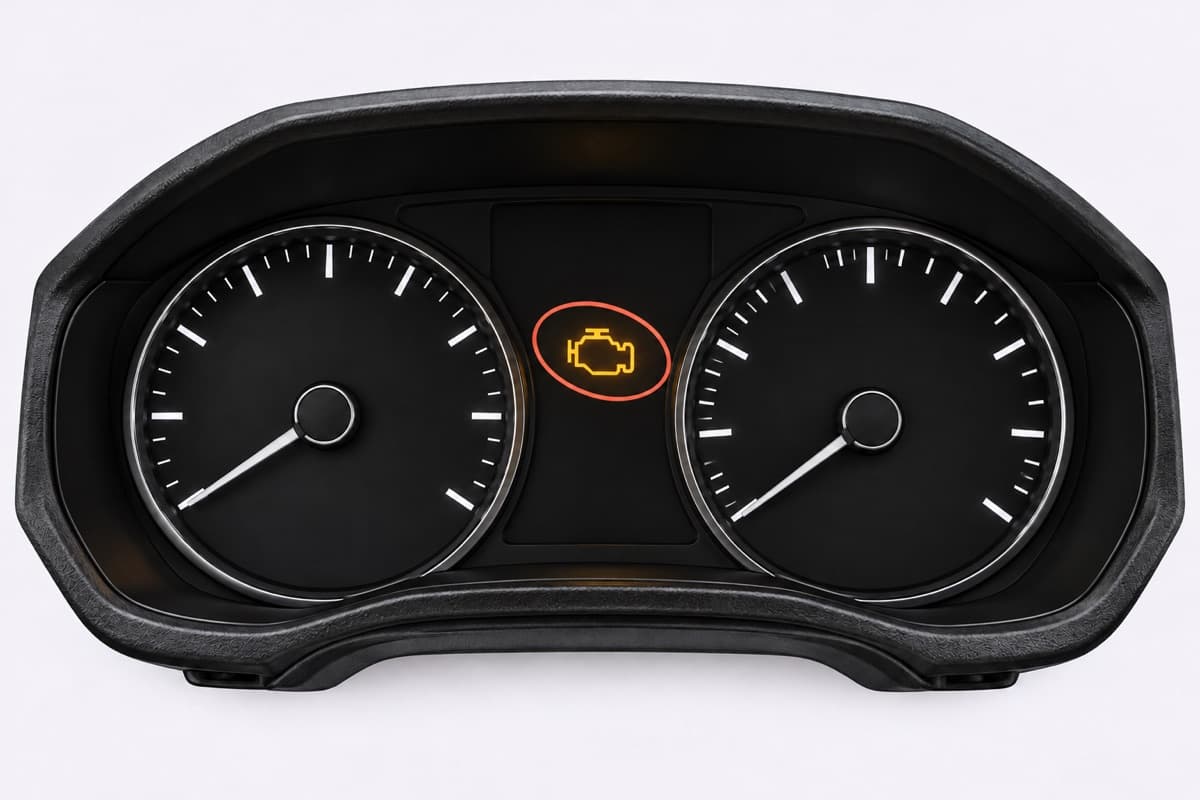
The AA says the light can come on for many reasons, not only emissions[8]. If you see it on a car’s record, ask what set it off and what was done. Our guide to lights and warning lights at the MOT has more.
Myth
White smoke is fine on a car with a DPF.
What's true
On a car with a DPF, visible smoke of any colour is a major fault.
Myth
A DPF delete passes if the smoke reading is low.
What's true
A missing or tampered filter is a separate major fault. It can fail the car even when the smoke reading is within the limit.
Myth
The engine warning light is only about emissions.
What's true
It is graded as its own major fault. The AA says it can come on for other faults too[8].
In our figures, yes, especially when they are young. These figures are for cars only. Vans are left out, because they would push the diesel numbers up.
- Diesel
- 15.5%
- Electric
- 13.4%
- Petrol
- 10.2%
- Hybrid
- 9.7%
MOT Wise analysis of DVSA MOT results, 2025. Each car’s first-ever MOT, taken in 2025: failed first MOTs as a share of all first MOTs. Cars only. Based on 157,208 diesel, 215,231 electric, 686,256 petrol and 333,738 hybrid first MOTs. Hybrid means full, mild and plug-in hybrids together.
Of diesel cars on their first MOT, about 1 in 7 (15.5%) failed, by our count. Of petrol cars, about 1 in 10 (10.2%) did. In the yearly figures below, which count retests, the gap between diesel and petrol is smaller at older ages.
| Age of car | Diesel | Petrol | MOTs counted (diesel, petrol) |
|---|---|---|---|
| 3 years | 13.3% | 9.4% | 232,859 and 892,225 |
| 5 years | 14.4% | 12.5% | 531,453 and 1,258,001 |
| 7 years | 17.4% | 16.3% | 1,047,683 and 1,604,950 |
| 10 years | 23.3% | 22.5% | 1,504,245 and 1,480,706 |
| 15 years | 30.3% | 30% | 692,959 and 1,097,681 |
MOT Wise analysis of DVSA MOT results, 2025. Failed tests as a share of all passed and failed tests at that age, retests included. Most retests pass, so these rates run lower than first-MOT rates. Cars only.
At 3 years old, 13.3% of diesel car MOTs failed against 9.4% of petrol. By 7 years the gap is 17.4% against 16.3%. By 15 years the two are almost level (MOT Wise analysis of DVSA MOT results, 2025).
These are rates for groups of cars, not for any one car. Diesels of the same age have typically done roughly 50% to 60% more miles than petrols (MOT Wise analysis of DVSA MOT results, 2025). The models in each group differ too. So the figures describe the groups. They don’t show why the groups differ.
At 5 years, one clear difference is the engine warning light. By our count, diesel cars had at least 1.24 warning-light failure records per 100 MOTs, against 0.26 for petrol cars. By 10 to 12 years old, the two are close.
| Age of car | Diesel: warning light | Petrol: warning light | Diesel: emissions test | Petrol: emissions test |
|---|---|---|---|---|
| 5 years | 1.24 | 0.26 | 0.15 | 0.21 |
| 7 years | 1.29 | 0.45 | 0.14 | 0.76 |
| 10 years | 0.98 | 0.84 | 0.37 | 1.45 |
| 12 years | 0.84 | 0.78 | 0.37 | 1.79 |
MOT Wise analysis of DVSA MOT results, 2025. Cars only. A failure record is one fault that failed an MOT. These are for the engine warning light, and for the emissions test itself (smoke for diesel, gas readings for petrol). The counts come from each model’s most common faults, so they are a minimum.
On the emissions test itself, petrol cars show more failure records than diesels. By our count, at 12 years old there were at least 1.79 per 100 petrol MOTs, against 0.37 for diesel.
A warning-light failure doesn’t say what set the light off. If it shows on the record of a diesel you are looking at, ask what the fault was and what was done.
The MOT record shows what testers found on each test day. It can’t show what has happened since the last test. These points help fill the gap.
Questions and checks for a used diesel
0 of 8 done
Zones and charges are covered in ULEZ and clean air zones. To see how fail rates change as cars age, read fail rates by age. For the same figures on electric and hybrid cars, see electric and hybrid cars and the MOT.
If something on the record doesn’t add up, it’s fine to take your time and ask for proof before you decide.
Common questions
Do diesel cars have a different MOT test?
Mostly the same, with a different exhaust check. A diesel gets a smoke test, where a meter measures the smoke while the engine is revved. A petrol car gets a gas test. A diesel with a particulate filter is also checked to make sure the filter is there.
Is removing a DPF illegal?
The MOT fails a car whose filter is missing or has been tampered with, if it was built with one. Whether driving such a car without its filter is illegal depends on the car’s age. The rules are under review (as of 10 October 2026).
Will a diesel fail its MOT for smoke?
It can. Smoke over the limit is a major fault. On a car with a DPF, any visible smoke is a major fault, whatever its colour. Smoke so heavy it hides other road users is a dangerous fault.
Does the engine warning light fail a diesel MOT?
Yes, on diesels first used from 1 July 2008. A light that doesn’t work, or shows a fault, is a major fault. The AA says the light can come on for many reasons, so ask what set it off.
Do diesel cars fail the MOT more than petrol cars?
On their first MOT, yes, in our figures. For cars first used in 2021 or 2022, 15.5% of diesels failed their first MOT in 2025, against 10.2% of petrols. Our figures for all MOTs, retests included, show the gap narrowing at older ages (MOT Wise analysis of DVSA MOT results, 2025).
Sources
- MOT inspection manual: 8 Nuisance (8.2.2 compression ignition engine emissions). DVSA, 2026.
- Diesel particulate filters (guidance note). DfT and DVSA, 2013.
- Road Vehicles (Construction and Use) Regulations 1986, regulation 61A. legislation.gov.uk, 2006.
- In-use emissions of road vehicles: regulating environmental impacts (consultation). DfT, 2026.
- Car parts checked at an MOT. DVSA, 2015.
- MOT changes: 20 May 2018. DVSA and DfT, 2018.
- Getting an MOT: MOT test result. GOV.UK (DVSA).
- Why is my engine management light on?. The AA, 2025.
- Cars (ULEZ minimum standards). Transport for London.