In short
- About 1 in 9 first-time tests of cars and light vans (10.9%) had a failing lamp or electrical defect in 2024 to 2025 (DVSA). That is the most common area[10].
- The car fails if a checked warning light shows a fault. That covers the engine, ABS, airbag, stability control, tyre pressure, power steering and parking brake lights[2][5].
- Oil, battery, coolant, service and diesel particulate filter warning lights have no rule of their own in the manual.
- A brake light or headlamp that doesn't work is a major fault, but one number plate bulb out can be minor[1].
- LED or HID bulbs in a headlamp made for halogen bulbs fail cars first used on or after 1 April 1986[1].
On this page
- Which lights does the MOT check?
- Headlamps: bulbs, aim and LED conversions
- Brake lights, indicators and number plate lamps
- Which dashboard warning lights fail an MOT?
- Will the engine warning light fail an MOT?
- Warning lights the MOT does not check
- How common are light and warning light faults?
- Checking lights and warning lights at a viewing
- Warning lights and the MOT: myths and facts
- Common questions
- Sources
The MOT is the yearly check that a car is safe and fit for the road. It covers the lights outside the car and some of the warning lights on the dashboard.
Outside, the tester checks the headlamps, side lamps, brake lights, indicators, fog lamps, reversing lamps and number plate lamps[1]. Inside, they check the dashboard lights listed further down this page.
The tester grades each fault. Dangerous and major faults fail the car. A minor fault, which has little effect on safety, doesn't. Nor does an advisory, which is something the tester noticed that may need work soon[8]. Our guide to minor, major and dangerous MOT faults explains each grade.
- 10.9%
- of first-time tests of cars and light vans had a failing lamp or electrical defect, the most of any area.
- DVSA first-time tests of cars and light vans, April 2024 to March 2025[10]. First-time tests leave out retests.
- 25%
- of all the failing defects found were lamps or electrical equipment.
- Same tests. One test can have several defects.
- 0.13%
- of first-time tests had a dangerous lamp or electrical defect. Almost all lamp faults are major, not dangerous.
- Same tests.
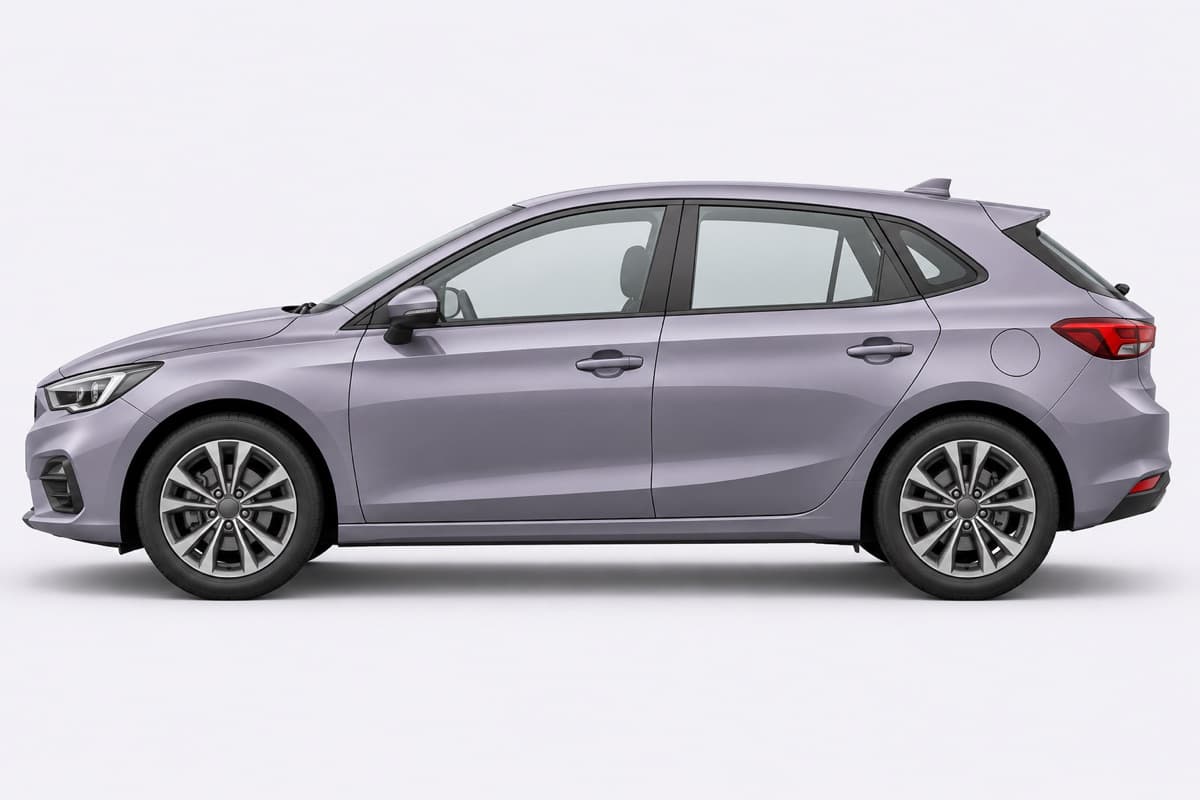
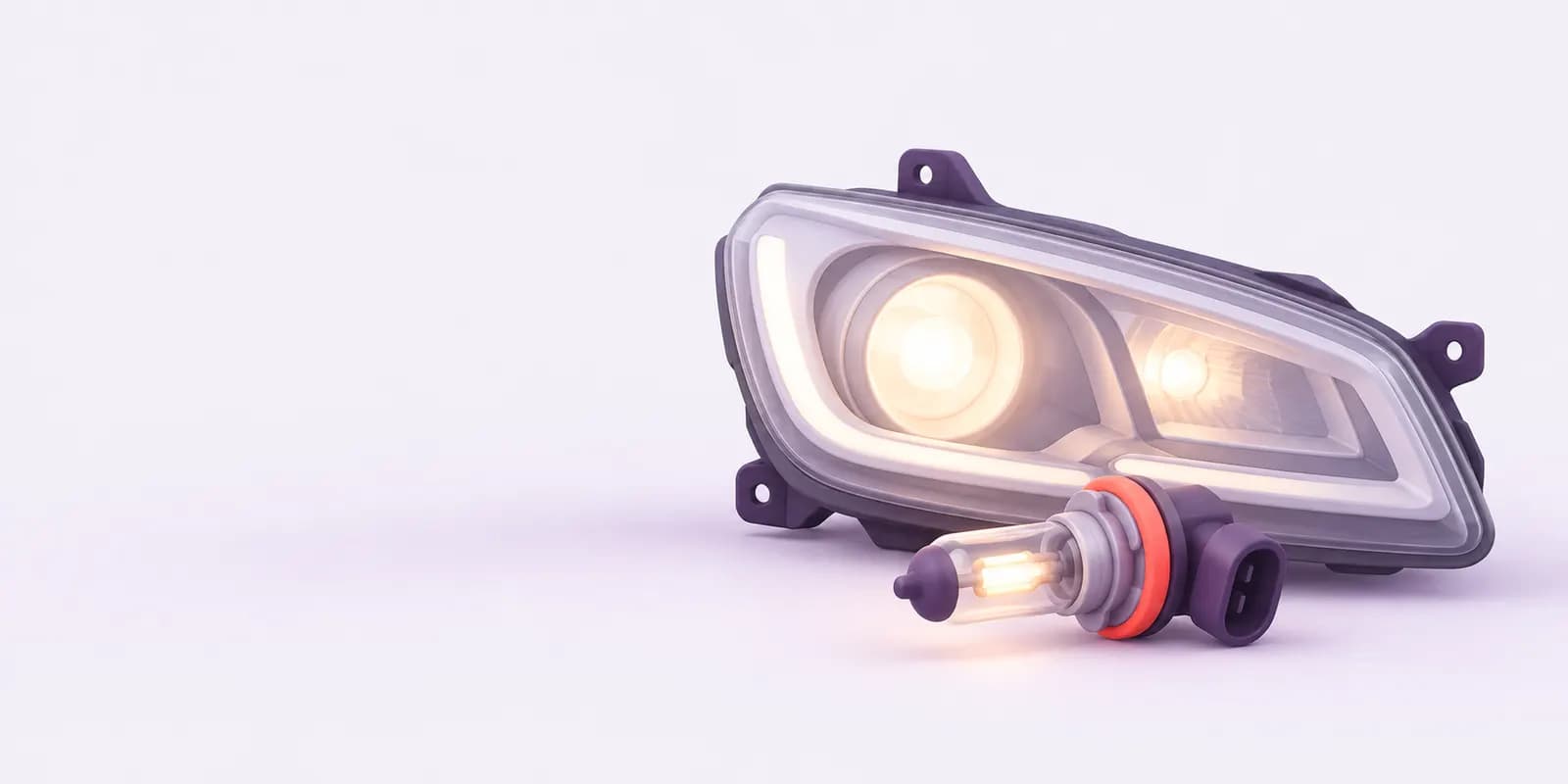
A headlamp that is missing or doesn't work is a major fault. So is one that is loose[1]. On an LED headlamp, up to half the light sources out is a minor fault. More than half is major.
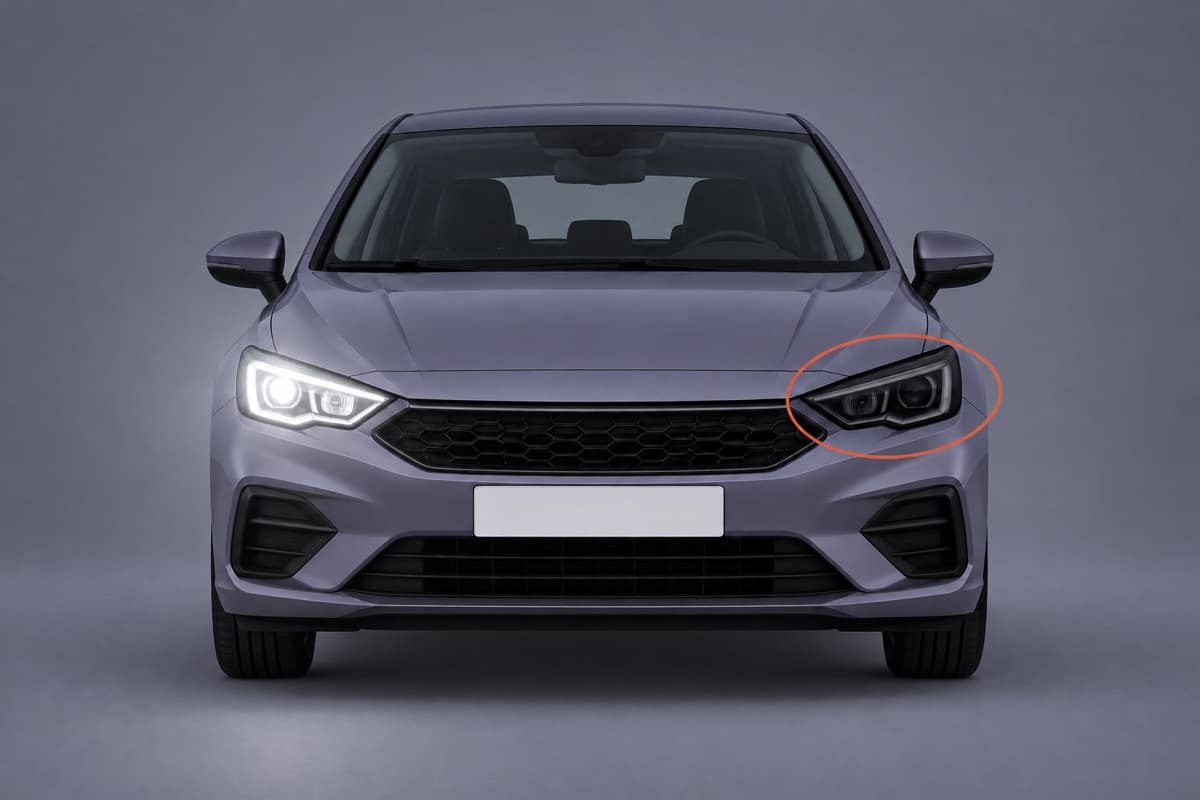
The beam matters as well as the bulb. A beam aimed outside the limits, or obviously wrong, is major. So is aim that can't be tested, and a fault with the dip switch. The two headlamps must also match, and the light must be white, white with a blue tinge, or yellow[1].
Many cars now have LED or HID bulbs. HID stands for high-intensity discharge. The rules depend on how the bulbs were fitted.
Fails the MOT
- LED or HID bulbs in a headlamp made for halogen bulbs, on a car first used on or after 1 April 1986 (major)
- Headlamp levelling that doesn't work, on a car with HID or LED headlamps (major)
- Headlamp washers that don't work, on a car with HID or LED headlamps first used on or after 1 September 2009 (major)
Does not fail
- A complete LED or HID headlamp unit built for that type of bulb. It must still pass every other check.
- A converted headlamp on a car first used before 1 April 1986
- Up to half the light sources out on an LED headlamp (a minor fault)
If a car has had its headlamp bulbs changed, ask whether the headlamp units were made for them.
Most lights follow one rule: a light that doesn't work is a major fault. The table shows the extra rules[1].
| Light | One not working |
|---|---|
| Brake lights | Major Good to know: If all of them are out, it is dangerous. Up to half the LEDs in one lamp out is minor. |
| Indicators | Major Good to know: They must be amber. A hazard warning device that is missing or doesn't work is also major. |
| Side lamps | Major Good to know: Each one that does not work counts. |
| Fog lamps | Major Good to know: The tester checks one rear fog lamp, on cars first used from 1 April 1980. Front fog lamps are checked only on cars first used from 1 March 2018. |
| Reversing lamps | Major Good to know: Checked on cars first used on or after 1 September 2009. |
| Number plate lamps | Minor, if the plate has two or more lamps and one is out Good to know: Major if there is only one lamp, or all are out. Also major if a lamp doesn't come on with the side lamps. A lamp that throws white light to the rear is minor. |
From section 4 of the MOT inspection manual[1]. Major and dangerous faults fail the car. Minor faults do not.
Daytime running lights are also checked, on cars first used on or after 1 March 2018[1].
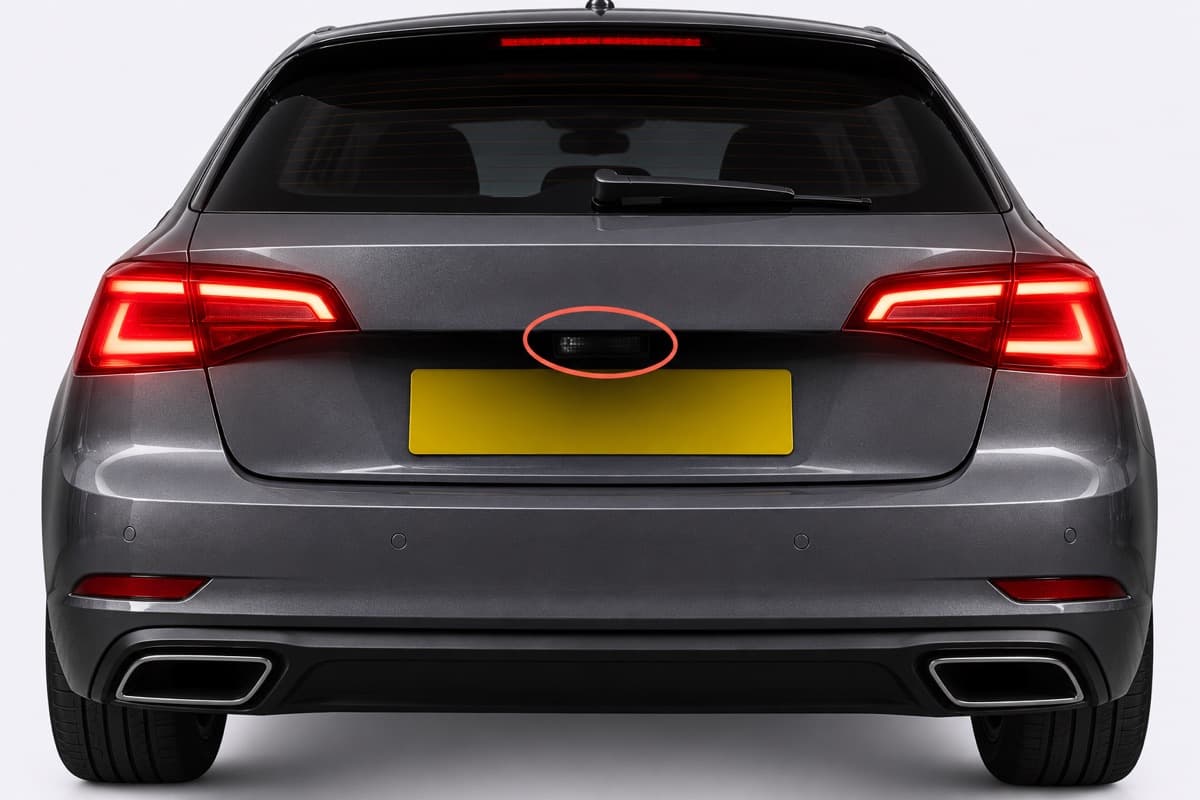
A number plate bulb is easy to miss. In 2025, about 1 in 30 MOTs (3.3%) had one of several number plate lamps not working. That version is a minor fault, which doesn't fail the car on its own. If the only lamp is out, or all of them are, the car fails. This is MOT Wise analysis of DVSA MOT results, 2025, for all MOT-tested vehicles.
Not every warning light is tested. The table shows the main ones the manual lists. For these, a light that shows a fault gets the result shown. For the engine and ABS lights, a light that doesn't work at all counts too.
| Warning light | Good to know |
|---|---|
| Engine warning light[2]Result: Major | The light should come on with the ignition, then go out. On some cars it goes out only after the engine starts. Checked on petrol cars first used on or after 1 July 2003. Also checked on diesel cars first used on or after 1 July 2008. |
| ABS (anti-lock brakes)[3]Result: Major | A light that doesn't work counts too. ABS removed or disabled on a car first used on or after 1 January 2010 is also major. |
| Airbag (SRS)[5]Result: Major | A light that only shows the passenger airbag is switched off is not a fault. |
| Stability control (ESC)[5]Result: Major | The tester fails it only when sure the light means a stability control fault. |
| Tyre pressure[7]Result: Major | Checked on cars first used on or after 1 January 2012. A lit light after an earlier loss of pressure is not automatically a fault. If the tester can't tell, they add an advisory. |
| Electric power steering[6]Result: Major | No extra rules in the manual. |
| Electronic parking brake[4]Result: Major | No extra rules in the manual. |
| Brake fluid[4]Result: Minor | A light that is lit or faulty. The car still passes. |
| Brake pad wear[4]Result: Not a fail | A lit pad wear light does not fail the car by itself. |
From the MOT inspection manual. Major faults fail the car. Minor faults do not.
A message on the dashboard is not a fault in its own right. It can help the tester decide that a light means something is wrong[5].
It can. An engine warning light that doesn't work, or shows a fault, is a major fault, so the car fails[2]. The AA says the same for an amber or red light that stays on once the engine is running[11].
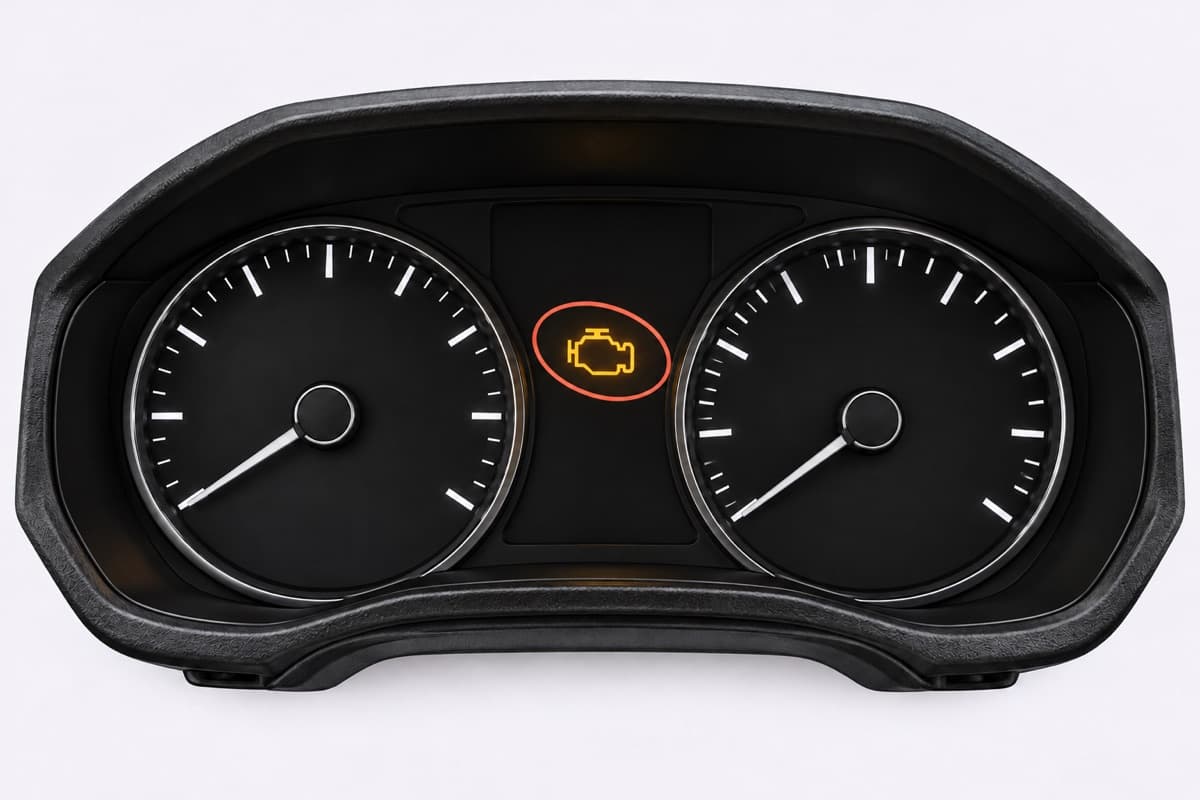
The check only applies to some cars. It covers petrol cars first used on or after 1 July 2003, and diesel cars first used on or after 1 July 2008. Hybrids are included[2]. Cars that run on gas (LPG), or on gas and petrol, are checked from 1 July 2008, like diesels[2]. Kit cars, amateur-built cars and American pick-ups are not required to have one.
The manual doesn't mention colours or flashing. It treats a light that shows a fault as a fault. The sources can't tell us what each colour means for the test.
The manual has no rule for oil pressure, battery, coolant temperature or service reminder lights. It has none for a diesel particulate filter (DPF) warning light either. A DPF is a filter in the exhaust that traps soot.
That doesn't make them harmless. A light for oil pressure or coolant temperature can point to a real problem with the engine. If one is lit at a viewing, ask the seller why.
A diesel with a DPF still fails if its exhaust gives off visible smoke of any colour. It also fails if the filter has been tampered with. Both are major faults[2]. Our guide to diesel cars and the MOT has more.
Light faults are more common at older ages. A number plate lamp out was recorded at 0.5% of MOTs at age 3 and 6.4% at age 17. Lamps and electrical equipment were 14% of failure records at age 3 and 22% at age 15. A failure record is a line recorded as major or dangerous, counted among the 100 commonest items at each age. These figures are MOT Wise analysis of DVSA MOT results, 2025, for all MOT-tested vehicles.
| Item | MOTs with it recorded | Advisory / fail / minor | Age 3 | Age 12 | Age 17 |
|---|---|---|---|---|---|
| One of the number plate lights not working | about 1 in 30 MOTs (3.3%) | 0% / 0% / 100% | 0.5% | 4.6% | 6.4% |
| Sidelight or rear light not working | about 1 in 50 MOTs (2%) | 29% / 71% / 0% | 0.2% | 2.9% | 4.4% |
| Brake light not working | about 1 in 50 MOTs (1.9%) | 49% / 51% / 0% | 0.3% | 2.6% | 3.8% |
| Headlamp aimed too low or out of line | 1.6% of MOTs | 62% / 38% / 0% | 1.3% | 1.8% | 2.1% |
| Indicator lens slightly discoloured | about 1 in 75 MOTs (1.4%) | 78% / 22% / 0% | 0.1% | 2.2% | 2.7% |
MOT Wise analysis of DVSA MOT results, 2025. Share of MOTs of all MOT-tested vehicles with the item recorded at any level. First for ages 3 and over, then at the ages shown. The three figures after it show how that item's records split between advisory, fail and minor. Advisory includes faults fixed during the test.
For bulbs, part of the advisory count is probably faults fixed on the spot at the test station, not warnings. The data can't say how many.
- Engine light, petrol code (8.2.1.2 h)
- 0.73%
- Engine light, diesel code (8.2.2.2 g)
- 0.47%
- Airbag light
- 0.39%
- Tyre pressure light
- 0.35%
- Stability control light
- 0.14%
MOT Wise analysis of DVSA MOT results, 2025. MOTs with the item recorded at any level, as a share of all MOTs of all MOT-tested vehicles aged 3 and over. Each figure is a floor, because these items are not among the 100 commonest at every age. The engine light has two codes in the manual: 8.2.1.2 (h) for petrol engines and 8.2.2.2 (g) for diesel engines. Both engine-light figures are shares of all MOTs, not of petrol or diesel tests.
Warning light faults are uncommon in the results, but when one is recorded it is usually a fail. Of the records for each item (MOT Wise analysis of DVSA MOT results, 2025):
- Engine light: 81% to 83% were fails.
- Airbag light: 78% were fails.
- Tyre pressure light: 79% were fails.
- Stability control light: 95% were fails.
You can check most of this yourself in a few minutes, in daylight, with someone to help. Owners can use the same list before a test: see what to check before an MOT.
Light and warning light check
0 of 9 done
Myth
Every warning light on the dashboard fails the MOT.
What's true
Only the lights in the manual are checked. Oil, battery, coolant, service and DPF lights have no rule of their own.
Myth
A tyre pressure light always fails the MOT.
What's true
It fails when the system is faulty or obviously not working. A light after low pressure is not automatically a fault.
Myth
A blown number plate bulb is always a fail.
What's true
It is a minor fault if the plate has two or more lamps and one is out. With a single lamp, or all out, it is major.
Myth
Old cars need a working engine warning light.
What's true
Only petrol cars first used on or after 1 July 2003, and diesel or gas cars first used on or after 1 July 2008.
For the commonest MOT fails overall, see the most common MOT failures. On a test drive, see our test drive checklist.
Common questions
Will the engine warning light fail an MOT?
Yes, on the cars the check applies to, which depends on the car's age and fuel. An engine warning light that doesn't work, or shows a fault, is a major fault under the current manual. If the light is on at a viewing, ask the seller why. The record can't show what the fault is.
Which dashboard warning lights fail an MOT?
A fault light for the engine, ABS, airbag, stability control, tyre pressure, electric power steering or electronic parking brake is major. A brake fluid light is minor. Oil, battery, coolant and service lights have no rule of their own.
Will a blown number plate bulb fail an MOT?
Not always. If the plate has two or more lamps and one is out, it is a minor fault and the car passes. If there is only one lamp, or all are out, it is major and the car fails.
Do LED headlight bulbs fail an MOT?
Not if the headlamp unit was built for LED bulbs. A halogen headlamp fitted with LED or HID bulbs fails on cars first used on or after 1 April 1986.
Does the tyre pressure warning light fail an MOT?
It can. On cars first used on or after 1 January 2012, a faulty tyre pressure system is a major fault. So is one that is obviously not working. A light that is on because of low pressure is not automatically a fault. If the tester can't tell, they note an advisory.
Sources
- MOT inspection manual: 4 Lamps, reflectors and electrical equipment. DVSA, 2026.
- MOT inspection manual: 8.2 Exhaust emissions (engine MIL). DVSA, 2026.
- MOT inspection manual: 1.6 Anti-lock braking system (ABS). DVSA, 2026.
- MOT inspection manual: 1.1 Brakes, condition and operation (1.1.6, 1.1.10, 1.1.13). DVSA, 2026.
- MOT inspection manual: 7.12 Electronic stability control; 7.1.6 SRS. DVSA, 2026.
- MOT inspection manual: 2.6 Electronic power steering. DVSA, 2026.
- MOT inspection manual: 5.2.3 Tyres (TPMS). DVSA, 2026.
- MOT rule changes: 20 May 2018. GOV.UK (DVSA), 2018.
- Getting an MOT: MOT test result. GOV.UK (DVSA), 2024.
- MOT testing data for Great Britain. DVSA, 2026. Table DVSA/MOT/03: classes 3 and 4, initial failures by defect category.
- Why is my engine management light on?. The AA, 2025.