In short
- Yes. Electric and hybrid cars need their first MOT by the third anniversary of registration, then every year[1].
- A fully electric car has no emissions test, because the manual’s emissions checks cover only petrol and diesel engines[2].
- Hybrids skip the exhaust gas and diesel smoke tests, but their engine warning light and exhaust system are still checked[2][3].
- The MOT doesn’t measure battery health or charging[4].
- By our count of DVSA’s 2025 MOT results, thin brake pads were recorded in 0.5% of MOTs on electric cars aged 3. For petrol cars it was 6.2%.
On this page
- Do electric cars need an MOT?
- What’s the same as any other car
- What’s different for an electric car
- What about hybrid cars?
- What our data shows about electric and hybrid cars
- Where electric and hybrid cars fail
- Brakes on electric and hybrid cars
- What a larger study found
- Buying a used electric or hybrid car: what to check
- Common questions
- Sources
Yes. Electric and hybrid cars follow the same MOT rules and timing as petrol and diesel ones[1]. The MOT is the yearly check that a car is safe and fit for the road.
In England, Scotland and Wales, the first MOT is due by the third anniversary of the car’s registration. After that it is due every year. Our guide to when a car needs its first MOT has the details.
The same testers’ manual applies. DVSA’s guidance tells testers they can’t refuse an electric car just because they aren’t familiar with it[5].
- The fee. The maximum for a car is £54.85, the same as for petrol and diesel cars (as of 10 October 2026). Garages can charge less[8].
- The grades. Testers record dangerous, major and minor defects and advisories, just as on any car. See what an MOT advisory means.
- Brakes. The manual’s brakes section applies to electric cars as to any other car, discs and pads included[7].
- Tyres, steering, suspension, lights, wipers, mirrors, seat belts and the horn. These are tested as on any car.
- Rust (the MOT says corrosion). The body and structure are checked as on any car.
Different for electric and hybrid cars
- A fully electric car has no emissions test and no exhaust system to inspect[2][3].
- Testers look at visible high-voltage wiring by eye only. Orange cables show high voltage[6][5].
- The battery is looked at only if it can be reached. A leaking one is a major defect[6].
- If orange cables or parts are damaged, or wires are exposed, the tester should abandon the test[5].
Checked the same as any other car
- Brakes, including discs and pads
- Tyres and wheels
- Steering and suspension
- Lights, wipers, washers and the horn
- Seat belts and airbag warning lights
- Body, including rust (the MOT says corrosion)
DVSA’s guidance says these systems usually run at between 350 and 600 volts. Some newer electric cars use about 800 volts. The tester doesn’t take anything apart, and the engine of a hybrid can start without warning[5].
Wiring insulation so worn that there is an imminent risk of fire or sparks is graded dangerous. Heavily worn insulation is major[6].
The main battery is unlikely to be reachable. If it can be seen, the tester looks at it by eye. A leaking battery is major, and so is one so loose that it could fall or short-circuit. A leaking main battery is a reason to refuse the test[6].
Hybrids, including mild hybrids, are left out of the exhaust gas test and the diesel smoke test[2]. The exhaust system is still inspected, because that check applies to any car with a petrol or diesel engine, hybrids included[3].
The engine warning light is also still checked on petrol and diesel hybrids with four or more wheels. That applies to petrol hybrids first used from 1 July 2003, and diesel hybrids from 1 July 2008[2]. Our guide to diesel cars and the MOT covers the diesel tests.
Electric and hybrid cars are still a small share of the cars at the MOT. Here is how the car MOTs of 2025 split by fuel.
- 55.7%
- were petrol cars: 21,436,312 MOTs.
- Share of car MOTs, cars aged 3 and over, 2025.
- 38.1%
- were diesel cars: 14,692,076 MOTs.
- 4.3%
- were hybrids: 1,641,392 MOTs.
- Full, mild and plug-in hybrids are counted together.
- 1.6%
- were electric cars: 632,811 MOTs.
- Battery electric cars only.
These are shares of car MOTs for cars aged 3 and over in 2025 (MOT Wise analysis of DVSA MOT results, 2025). Another 0.3% had no fuel type recorded. An electric car aged 3 or over in 2025 was first registered in 2022 or earlier, so this is a young group. The figures get thin from about 11 years old.
- Hybrid
- 9.7%
- Petrol
- 10.2%
- Electric
- 13.4%
- Diesel
- 15.5%
MOT Wise analysis of DVSA MOT results, 2025. Failed first MOTs as a share of all first MOTs, cars only: petrol 686,256, diesel 157,208, hybrid 333,738 and electric 215,231 first MOTs.
By our count, electric cars failed in about 1 in 7 first MOTs (13.4%). For petrol it was about 1 in 10 (10.2%), and for hybrids about 1 in 10 (9.7%). Diesels were highest, at about 1 in 7 (15.5%). The figures can’t say why.
Comparing cars of the same age is fairer. This table shows failed MOTs as a share of all passed and failed MOTs at each age.
| Age of car | Petrol | Diesel | Hybrid | Electric |
|---|---|---|---|---|
| 3 years | 9.4% | 13.3% | 8.9% | 11.6% |
| 5 years | 12.5% | 14.4% | 10.5% | 14.1% |
| 7 years | 16.3% | 17.4% | 13.7% | 17.7% |
| 10 years | 22.5% | 23.3% | 17.9% | 25.3% |
MOT Wise analysis of DVSA MOT results, 2025. Failed MOTs as a share of all passed and failed MOTs at that age, retests included. Cars only. Electric car MOTs behind each row: 262,540, 82,484, 15,867 and 11,172.
Hybrids fail least at every age shown. Petrol and diesel are close from about 6 years on. Electric cars sit between petrol and diesel at 3 years old. At 7 years electric and diesel cars are level. At 10 years electric cars are the highest of the four.
Read this as how each group did at the same age, not as which type is more reliable. The groups differ in the miles they have done and in which models are included. Our guide to MOT fail rates by age has the wider picture.
This table shows failure records per 100 car MOTs at 3 years old, by part of the car. A failure record is one fault written down as a fail, and one MOT can have several.
| Part of the car | Petrol | Diesel | Hybrid | Electric |
|---|---|---|---|---|
| Tyres | 4.7 | 5.4 | 5.0 | 9.8 |
| Brakes | 1.7 | 2.9 | 0.8 | 0.6 |
| Suspension | 0.6 | 1.9 | 0.4 | 1.7 |
| Lamps and electrical | 0.7 | 2.3 | 0.7 | 0.9 |
| Visibility (glass, wipers, washers, mirrors) | 1.7 | 2.1 | 1.7 | 1.4 |
| Body and structure | 0.1 | 0.3 | 0.1 | 0.0 |
| Exhaust, noise and leaks | 0.2 | 0.9 | 0.1 | 0.0 |
| Steering | 0.0 | 0.1 | 0.1 | 0.1 |
MOT Wise analysis of DVSA MOT results, 2025. Failure records per 100 car MOTs at 3 years old, counted from each model’s own 50 commonest items, so these are minimum figures. Cars only. MOTs behind each column: petrol 892,225, diesel 232,859, hybrid 409,285, electric 262,540.
Tyres stand out. Electric cars at 3 years old had at least 9.8 tyre failure records per 100 MOTs. For petrol it was at least 4.7, for diesel 5.4 and for hybrid 5.0 (MOT Wise analysis of DVSA MOT results, 2025).
Worn tyres are a separate measure. Counting advisories too, they were noted on at least 20.0% of electric car MOTs at age 3. For petrol it was 13.4%. That is by our count of DVSA’s 2025 MOT results.
The BVRLA is the vehicle rental and leasing trade body. A larger study for it found about 1.8 times as many tyre defects on electric cars as on petrol ones. It was most marked on some early electric cars adapted from petrol or diesel designs[4].
Which? says tyres for electric cars cost more on average. It points to the cars’ pulling power and to their often larger wheels[10]. The figures show the pattern, not the cause. Our guide to tyres and the MOT has the rules.
Dangerous defects are also highest on electric cars at 3 years old. One was recorded in about 1 in 25 MOTs (4.4%) for electric cars. For diesel it was 3.8%, for petrol 3% and for hybrid 2.6%. That counts cars with a known model generation (MOT Wise analysis of DVSA MOT results, 2025). The data doesn’t split them by part, so it can’t say what drives the electric figure.
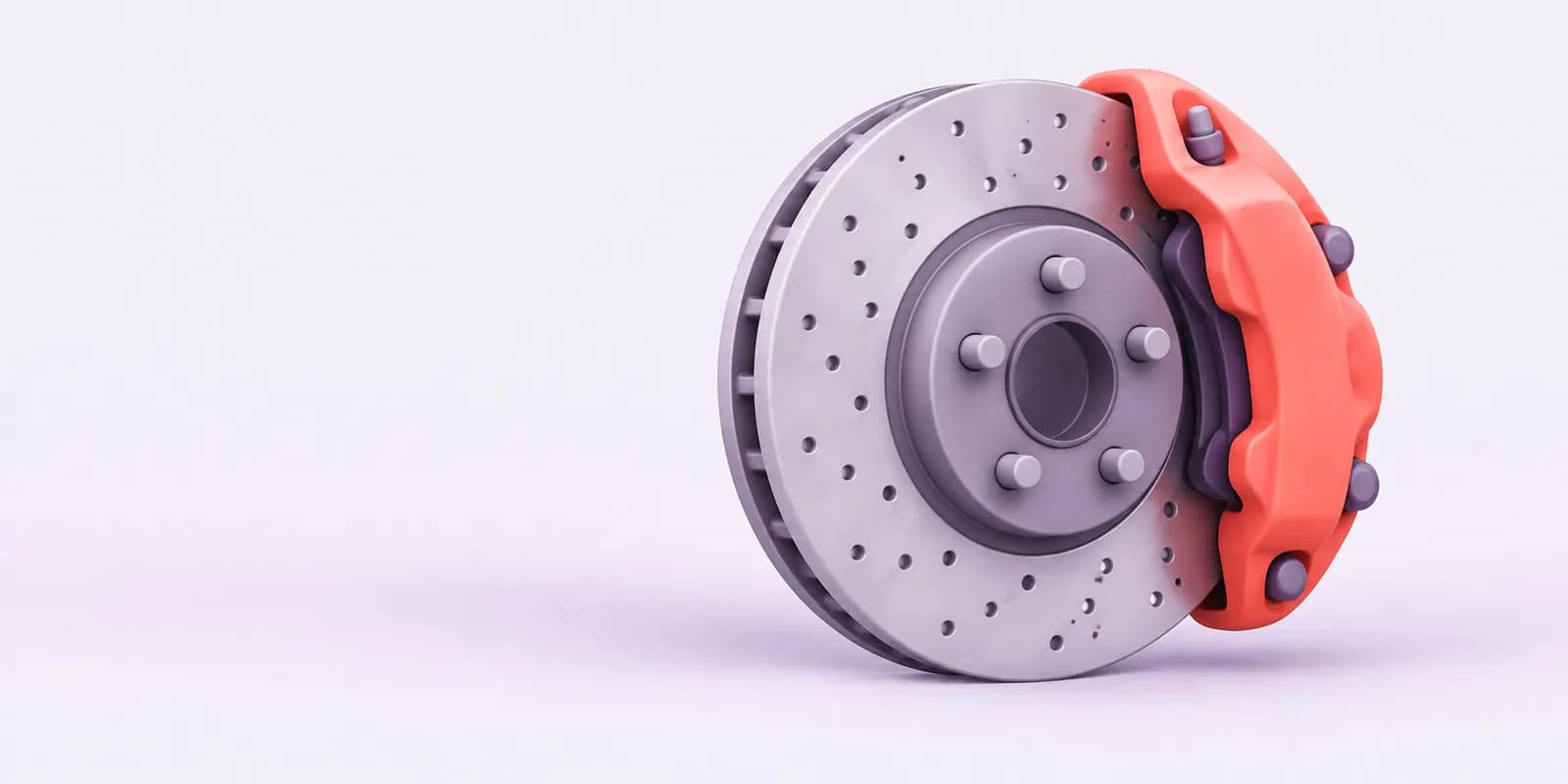
Brake pads show one of the clearest differences at young ages. Brake pads wearing thin were recorded in 0.5% of electric car MOTs at 3 years old. For petrol it was 6.2%, for diesel 9.1% and for hybrid 2.3% (MOT Wise analysis of DVSA MOT results, 2025).
| Age of car | Petrol | Diesel | Hybrid | Electric |
|---|---|---|---|---|
| 3 years | 6.2% | 9.1% | 2.3% | 0.5% |
| 5 years | 11% | 11.6% | 4.2% | 2.4% |
| 7 years | 10.2% | 11.4% | 6.2% | 7.7% |
| 10 years | 8.2% | 10.6% | 8% | 9.5% |
MOT Wise analysis of DVSA MOT results, 2025. Share of car MOTs with this recorded at any level (advisory, fail, minor, or put right during the test). Cars only. Electric car MOTs behind each row: 262,540, 82,484, 15,867 and 11,172.
At 10 years old there was no such gap. Electric cars had thin pads in 9.5% of MOTs, against 8.2% for petrol. Our figures show the pattern, not the cause.
| Age of car | Petrol | Diesel | Hybrid | Electric |
|---|---|---|---|---|
| 3 years | 4.7% | 5.3% | 2.9% | 3.9% |
| 5 years | 7.2% | 7.4% | 5.3% | 9.6% |
| 7 years | 8% | 8.5% | 7.6% | 11.5% |
| 10 years | 9.6% | 10.6% | 9.1% | 13.9% |
MOT Wise analysis of DVSA MOT results, 2025. Share of car MOTs with this recorded at any level (advisory, fail, minor, or put right during the test), where the disc is not seriously weakened. Cars only.
From 5 years, discs are the other way round: they were recorded more often on electric cars. At 3 years they were less common than on petrol and diesel cars. At 5 years old it was 9.6% against 7.2% for petrol. At 10 years it was 13.9% against 9.6%. Hybrids were lowest at every age (MOT Wise analysis of DVSA MOT results, 2025).
The BVRLA study found more defects in the friction brakes of older, low-mileage electric cars. Friction brakes are the discs, pads and similar parts that rub to slow the car. The researchers link this to corrosion from infrequent use[4].
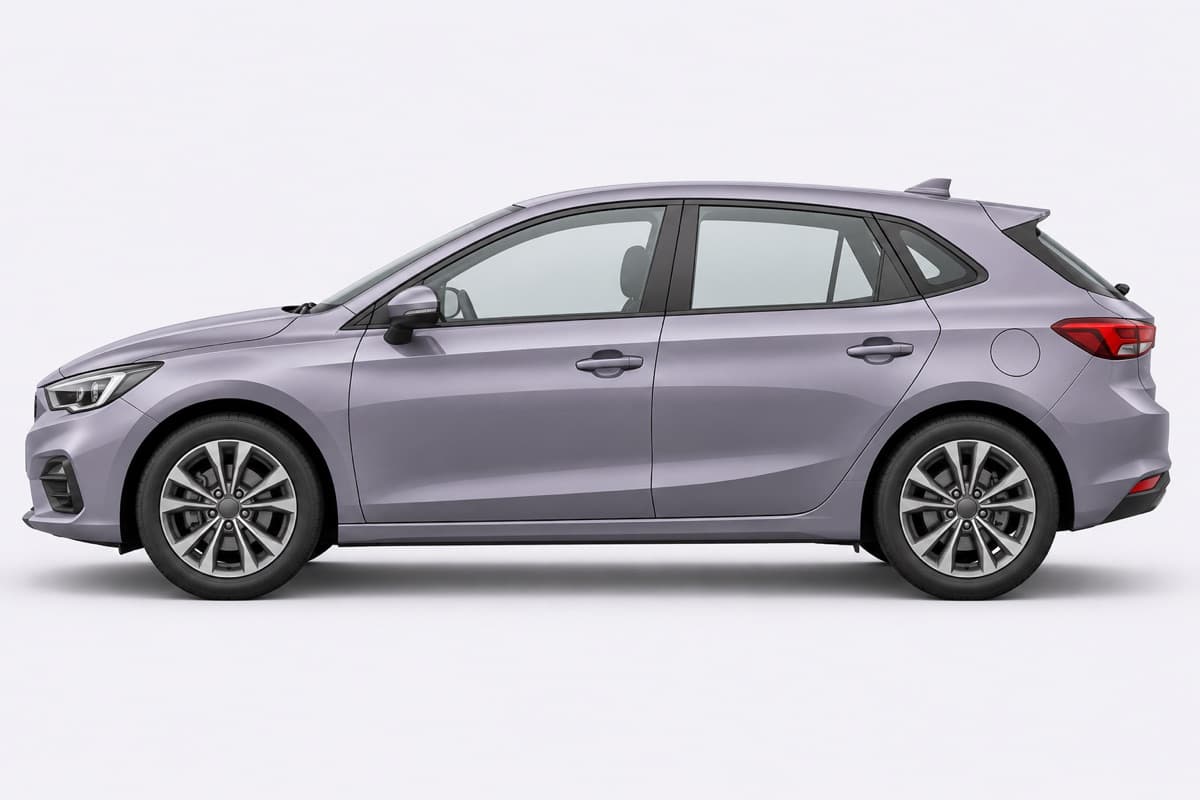
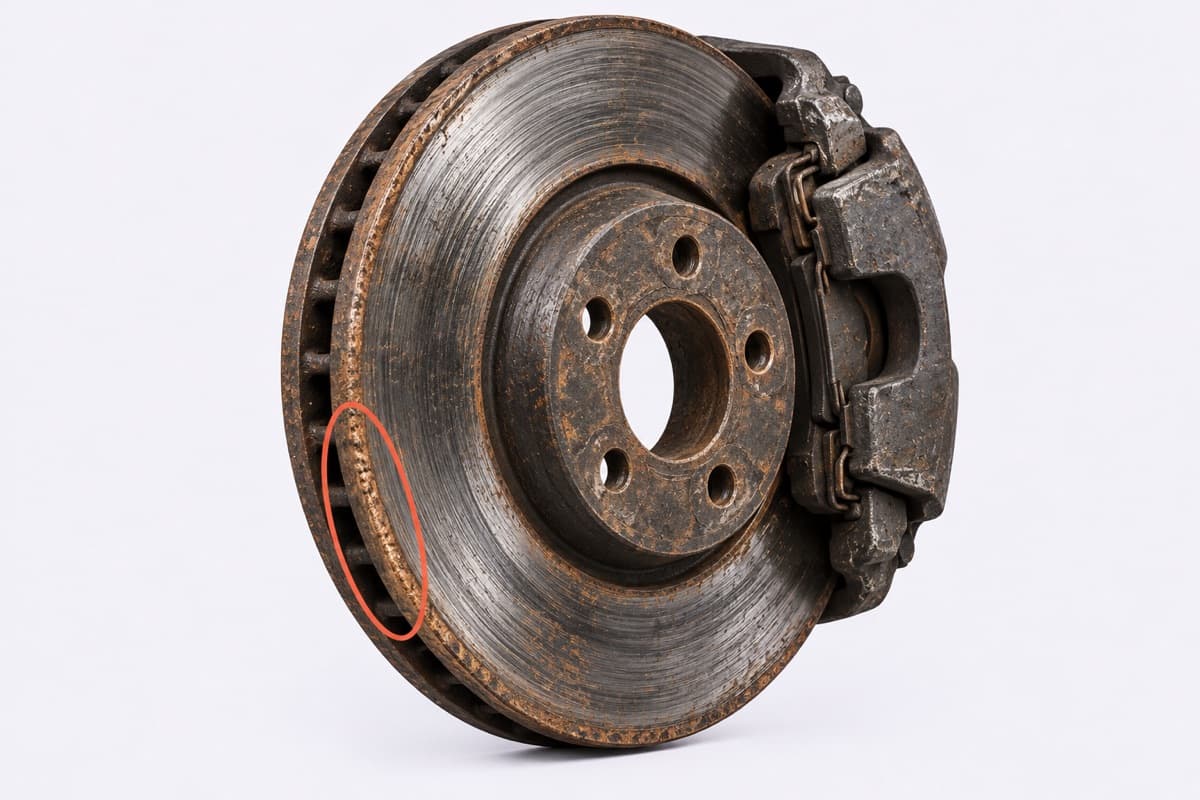
So a low-mileage electric car isn’t automatically easy on its brakes. Our guide to brakes and the MOT shows what testers look for.
The BVRLA study looked at 47.4 million DVSA MOT tests and was published on 22 September 2026. It counted only major and dangerous faults. It grouped cars by mileage and allowed for their age as well[4]. Our tables group by age only, and some count faults at every level. So the two don’t line up exactly.
| Miles on the clock | Battery electric cars | Petrol cars |
|---|---|---|
| 20,000 to 40,000 | 12.0% | 11.7% |
| 90,000 to 120,000 (cars aged 3 to 8) | 16.5% | 22.1% |
| More than 120,000 | 16.0% | 23.5% |
Study by New AutoMotive for the BVRLA, using DVSA MOT data. Only major and dangerous faults counted. This is not MOT Wise’s own analysis.
In that study, electric cars with high mileage failed less often than petrol ones. At low mileage the two were close. It also found no extra suspension defects on electric cars. At 60,000 to 90,000 miles there were 4.7 per 100 tests, against 6.1 for petrol.
The MOT record is a good start, but it can’t answer the biggest question on an electric car, which is the battery. The checks below stick to what we can support.
Checking a used electric or hybrid car
0 of 8 done
Our guide to questions to ask a seller has more to ask about a car’s record and its past.
Common questions
Do electric cars need an MOT?
Yes. They follow the same rules and timing as petrol and diesel cars. A car under 3 years old usually has no MOT history yet. For an older one, the GOV.UK MOT history page shows when its next MOT is due.
Is there an emissions test for electric cars?
No. The MOT’s emissions checks cover only petrol and diesel engines, and an electric car has no exhaust. Hybrids skip the exhaust gas and diesel smoke tests, but their engine warning light and exhaust system are still checked.
Does an electric car MOT test the battery?
Not its health or charging. The tester only looks at what can be seen. Visible high-voltage wiring is checked by eye, and the battery is looked at only if it can be reached.
Do electric cars pay the same MOT fee?
Yes. The maximum fee for a car is £54.85, the same as for petrol and diesel cars, as of 10 October 2026. Garages can charge less.
Do electric cars fail the MOT more than petrol cars?
MOT Wise’s analysis of DVSA’s 2025 results counts retests. In it, electric cars aged 3 failed more often than petrol cars, and hybrids least. A separate study for the BVRLA, the vehicle rental and leasing trade body, counted only major and dangerous faults. It found electric cars failed less often than petrol cars at high mileage.
Sources
- Getting an MOT: When to get an MOT. GOV.UK (DVSA).
- MOT inspection manual: 8. Nuisance (emissions). DVSA, 2026.
- MOT inspection manual: 6.1.2 Exhaust system. DVSA, 2026.
- The 60,000-mile rule is dead: high-mileage electric cars prove more durable than petrol. British Vehicle Rental and Leasing Association (BVRLA), 2026. A trade body’s report of a study by New AutoMotive of 47.4 million DVSA MOT tests.
- Hybrid, electric and hydrogen fuel cell systems: guidance for MOT testers. DVSA, 2021.
- MOT inspection manual: 4. Lamps, reflectors and electrical equipment (4.11 wiring, 4.13 battery). DVSA, 2026.
- MOT inspection manual: 1. Brakes. DVSA, 2026.
- Getting an MOT: MOT costs. GOV.UK (DVSA).
- How the MOT scheme works. NI Direct.
- Car servicing and repair costs. Which?, 2026.