In short
- The risk rating is our summary of a car’s whole MOT record, from Very Low to Very High. It is not a pass or fail, a price or a verdict.
- It comes from a score out of 100. Each level covers a fixed score range, and a few serious records set a lowest rating whatever the score adds up to.
- A Medium rating does not mean a bad car. It means the record has some things worth asking about before you decide.
- The confidence meter, from Limited to Strong, is separate. It says how much data the rating rests on, not how risky the car is.
- The rating reads the MOT record only. It can’t see money owed on the car, write-offs, service history, or the engine, clutch and gearbox[1].
On this page
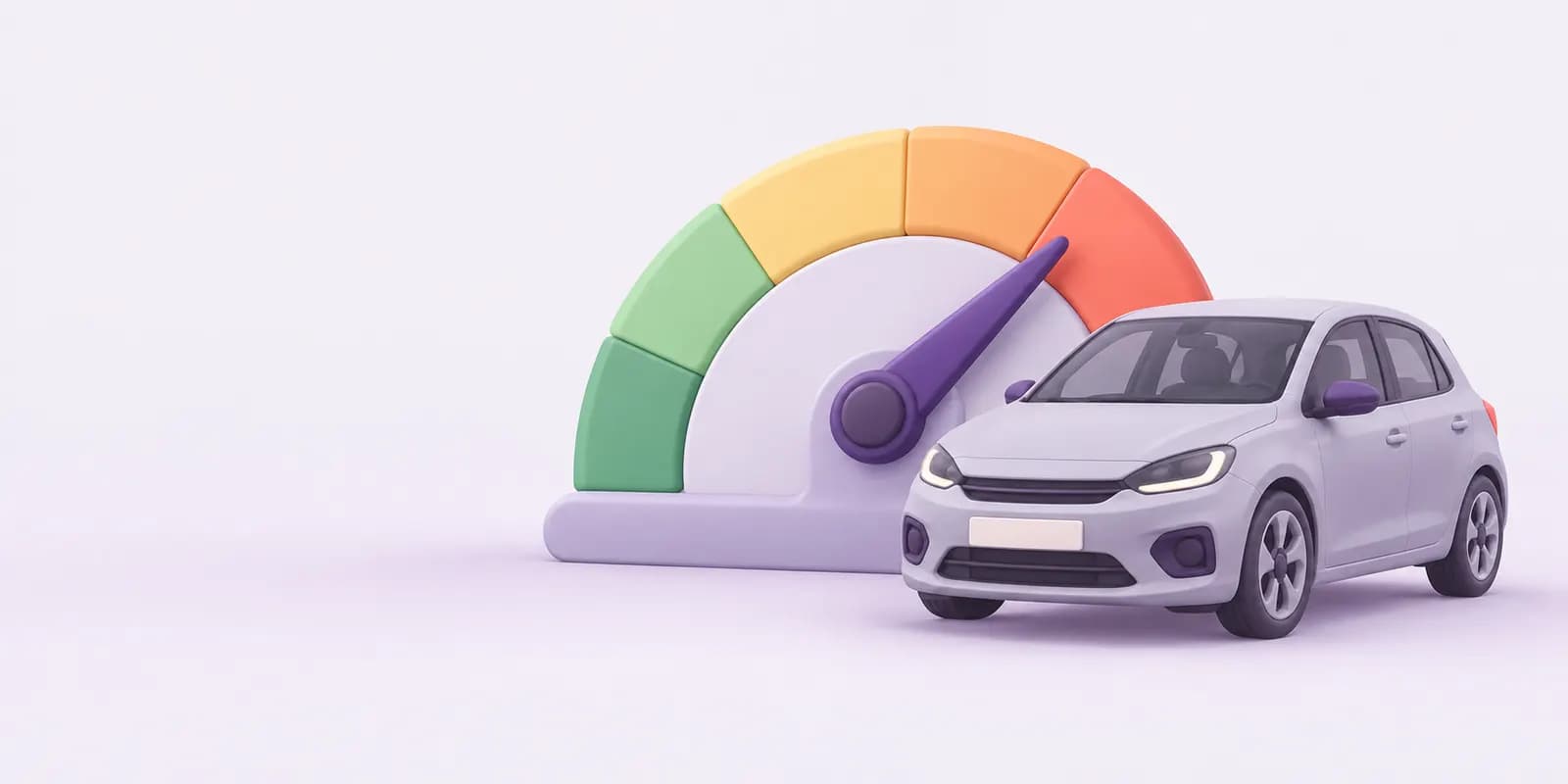
When you check a car on MOT Wise, it gets a risk rating from Very Low to Very High. It is our summary of the car’s full MOT history: every test, every graded fault[4] and every mileage reading on record. For cars, it also takes in a small adjustment for how the model usually does.
We call the label the rating and the number behind it the score. The score is out of 100. The rating is there to help you decide, not to decide for you. It says how much attention the car’s record needs.
Every report links to its score page from under the rating (“See every factor behind this score”). That page shows the score on a ruler with its band, and what the score is made of, row by row. Open a row to see the facts from the record behind it.
Each rating covers a fixed range of the score, and the ranges are the same for every car. A few serious records set a lowest rating. When that happens, the score is lifted to the bottom of that rating’s range. The list of factors further down says which.
A Medium rating does not mean “bad car”. It means the record has some signs worth looking into before you decide. At every level, the rating covers the MOT record only, so a vehicle history check and a test drive still apply.
The score is built from the car’s full MOT history. Each factor below adds or takes away points, and the total is put on a 0 to 100 scale. Faults in parts that keep the car safe count for more than faults in parts that are expected to wear out.
On a car’s score page, the factors that apply to that car are grouped under “What the score is made of”. Here is everything the score looks at.
The detail of how each factor is worked out is on our methodology page. How MOT Wise works covers the data behind it.
Treat the rating as a starting point for your questions. The report lists questions to ask the seller for each car, drawn from its own record. Open the score page to see which factors added points. If you can explain one, you can weigh it differently. For example, you may know a gap in the record was because the car was SORN (declared off the road).
The rating can change as the record grows. Recent MOTs count for more than old ones. A new fail adds points, and a run of passes can bring the score down.
The rating does not give a price. The Running costs tab in the report shows yearly cost ranges. Our used car buying checklist covers the rest of the job.
The rating is built from the MOT history, which records what the MOT checked on the day. The MOT does not cover the engine, clutch or gearbox[1], and a test record is not evidence of general mechanical condition[2]. So the rating can’t tell you about:
- Engine internals, such as the timing belt, head gasket or turbocharger.
- The gearbox and clutch: smooth engagement, slipping or unusual noises.
- Heating, air conditioning, windows and other electrics the MOT does not test.
- Accident damage that was repaired but did not touch the parts the MOT checks.
- Service history, gaps in servicing and missed maintenance.
- Money still owed on the car, theft, or an insurance write-off.
- What the car is worth. The rating is not a price or a valuation.
A car with no MOT history yet, such as one under three years old, has no rating in its report. The comparison tool gives it a provisional rating built from similar cars, not its own record. Vans, motorcycles and minibuses are scored without the similar-cars part, because those figures are built from cars.
For the rest of the picture, add a test drive, the service record and a vehicle history check. A history check can show money owed, theft and write-offs[3]. What an MOT history can’t tell you covers each gap. Minor, major and dangerous MOT faults explains the grades the rating reads.
Every report also shows a confidence meter, called “How sure we are”, with five steps from Limited to Strong. For a van, motorcycle or minibus it is called “MOT history completeness”. Confidence is about how much the data can tell us, not about risk. A car can have a High rating with Strong confidence, where plenty of data clearly shows problems. Or it can have a Medium rating with Weak confidence, where little data leaves the picture uncertain.
Confidence is lower when there are few MOT tests to go on, or gaps in the history. It is also lower when mileage readings don’t match, when the MOT has run out, or with little data on similar cars. Tests that list no faults, as Northern Ireland tests do, count for less. A record made only of those reads Weak. When the meter reads Weak or Limited, the rating is less certain. The true picture could be better or worse than shown.
Common questions
What does a Medium risk rating mean?
It means the car’s record has some things worth asking about. Examples are advisories that kept coming back, or mileage that doesn’t quite add up. It does not mean a bad car. Read the faults the report lists and ask the seller about them.
Is the risk rating a pass or a fail?
It is not a pass or a fail. It is a summary of the whole MOT history, from Very Low to Very High, built from a score out of 100. It does not tell you what to decide.
What is the difference between risk and confidence?
Risk is what the record shows. Confidence is how much data the rating rests on. A short record can give a Low or Very Low rating with Weak or Limited confidence, because there is little to go on.
Can a car’s risk rating change?
Yes. The score is built from the whole MOT record, so a new test can move it. A new fail adds points, and a run of passes can bring the score down.
Does the risk rating include finance, write-offs or theft?
No. It reads the MOT record only. A separate vehicle history check can show money owed, theft and write-offs.
Sources
- Getting an MOT: the MOT test. GOV.UK.
- MOT testing guide for test stations: introduction. DVSA, 2026.
- Buying a used car. Citizens Advice.
- MOT rule changes: 20 May 2018. GOV.UK (DVSA and DfT), 2018.