
Fiat Punto Evo (2010-2018) reliability
Fiat Punto Evo built around 2018: fails its MOT more often than average
Fiat Punto Evos built around 2018 fail their MOT more often than similar cars the same age. Look closely at the tyres on any car you view.
Looking at a Fiat Punto Evo?
Enter its number plate to see its full MOT history, risk rating and running costs.
Key figure
28% of MOT tests on Fiat Punto Evos built around 2018 ended in a fail (retests included), against 14% for similar cars the same age.
Most common issue
The most common MOT issue on Fiat Punto Evos built around 2018 involves the tyres.
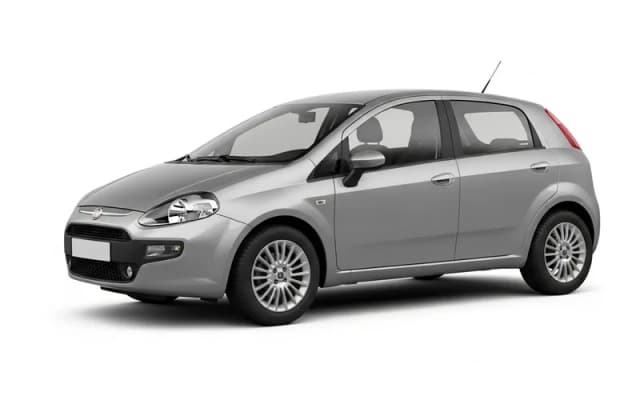
Based on 41,096 tests of Punto models registered 2010-2018.
About 1 in 30 Punto Evo MOTs (3.3%) failed and still hadn't passed 3 days later. That's for cars built around 2018 (7 years old), all fuels combined.
Based on 923 tests (DVSA MOT results, 2025), a small sample, so the figure is likely between 2.3% and 4.6%. A fail that passed a retest within 3 days, even the same day, isn't counted. Nor is a fail with no later MOT on record.
About 1 in 25 Punto Evo MOTs (4.3%) found at least one dangerous defect. These are cars built around 2018 (7 years old).
Based on 923 tests (DVSA MOT results, 2025), a small sample, so the figure is likely between 3.2% and 5.8%. Dangerous is the most serious grade an MOT gives: a direct risk to road safety.
Punto Evo fail rate by age
Fail rate is the share of MOT tests that ended in a fail. Retests count as tests. How we count fail rates Build years are worked out from age, so they are approximate. Tests counted are 2025 MOTs. Highest fail rate at 14 years old.
How the Punto Evo compares
At each age below, see how the Punto Evo holds up against other cars the same age. The averages combine all fuel types.
Based on 46,069 tests across 9 Fiat models, built around 2018 (7 years old).
Fail rate is the share of MOT tests that ended in a fail. Retests count as tests. How we count fail rates Build years are worked out from age, so they are approximate. Tests counted are 2025 MOTs.
What to check before viewing
The model's most common MOT issues, turned into things you can ask about or look for.
Tyres
Worth checkingCheck tread depth across the full width on all four; uneven wear suggests alignment or suspension issues.
Steering track rods
Worth checkingOn a flat surface, rock the steering wheel briefly with the engine off and listen for clunks.
Suspension springs
Worth checkingCheck ride height is even side-to-side and look for cracked or rusted coils.
Vehicle-specific check
Worth checkingCheck the car’s number plate on MOT Wise to see its own MOT history and any recalls for its build years.
Other hatchbacks to compare
Other hatchbacks, with each one's figures taken at the same age as the Punto Evo.
- 1

Honda Jazz
Same body type, tested at the same age
- Fail rate
- 10.2%
- Fail, no pass in 3 days
- 0.8%
- Dangerous
- 3.7%
- Still registered at 10 years
- 98%
Lower fail rate: 10.2%, against 27.5% for the Fiat Punto Evo, both built around 2018.
6 critical recall campaigns matching this model/build period.
21,810 MOT tests on cars built around 2018
- 2

Ford Ka
Same body type, tested at the same age
- Fail rate
- 16.7%
- Still registered at 10 years
- 94.3%
Lower fail rate: 16.7%, against 27.5% for the Fiat Punto Evo, both built around 2018.
Some figures could not be compared for these two cars. So this comparison uses the fail rate, share still registered and recalls only.
14,260 MOT tests on cars built around 2018
- 3

Kia Rio
Same body type, tested at the same age
- Fail rate
- 13.6%
- Fail, no pass in 3 days
- 1.5%
- Dangerous
- 4.6%
- Still registered at 10 years
- 93.9%
Lower fail rate: 13.6%, against 27.5% for the Fiat Punto Evo, both built around 2018.
7,421 MOT tests on cars built around 2018
- 4
Honda Civic
Same body type, tested at the same age
- Fail rate
- 13.9%
- Fail, no pass in 3 days
- 2.3%
- Dangerous
- 5.1%
- Still registered at 10 years
- 96%
Lower fail rate: 13.9%, against 27.5% for the Fiat Punto Evo, both built around 2018.
10 critical recall campaigns matching this model/build period.
15,309 MOT tests on cars built around 2018
- Fail rate
- = the share of MOT tests that ended in a fail. Retests count as tests.
- Fail, no pass in 3 days
- = the share of MOT tests that failed and still hadn't passed 3 days later. A fail that passed a retest within 3 days, even the same day, isn't counted.
- Dangerous
- = the share of MOT tests where the tester marked a fault as dangerous. It is against the law to drive the car until it is fixed.
- Still registered at 10 years
- = the share of cars still registered (taxed or declared off the road) 10 years after they were first registered.
How many are still registered
UK average for cars first registered in 2014 to 2015: 92% · About typical
The share still registered can reflect demand, the cost of repairs, exports, write-offs and how owners use the car. It isn't proof of how long the car lasts mechanically.
Source: DfT vehicle licensing statistics (VEH0124).
Recall context
16 recalls in all5 of the 16 Punto Evo recalls cover cars built in these years.
- 2 Critical
- 3 more
Top concerns
- Fire may occur
- The wrong airbag may deploy in a collision
- Front seat belt pretensioner may malfunction during deployment
For the exact car, check GOV.UK's recall checker with the number plate.
How Punto Evo cars have aged
How Punto Evo cars have aged
How fail rates have changed as these cars got older. Each line follows cars first registered in about the same year across several years of MOT data. Not a prediction for any one car.
Punto Evo variants compared
Most common issues on Fiat Puntos of this age
This list covers every Fiat Punto built around 2018, whichever generation it is. We don't have a defect list for the Punto Evo on its own.
Most common advisories and fails
In order of the share of MOT tests that recorded each one
- 119.1%Advisory
Tyre worn close to the legal limit or worn on the edge
- 216.5%Advisory
Tyre slightly damaged, cracking or perishing
- 310.7%Minor
Track rod end dust cover damaged, but still keeps dirt out
- 48.3%Major
Track rod end dust cover damaged and no longer keeps dirt out
- 58.3%Advisory
Coil spring corroded
Based on 923 tests
Looking at a Fiat Punto Evo?
Enter its number plate to see its full MOT history, risk rating and running costs.
Frequently asked questions
Built around 2018 (7 years old), the Fiat Punto Evo (2010-2018) fails MOTs noticeably more often than typical for this age. This is based on 923 7-year-old MOT tests from DVSA data. Each retest counts as a test.