
Toyota

Toyota Camry reliability by build year

Coverage 2019-present1 named generationSaloonPETROL / HYBRID ELECTRIC

We've only got 538 MOT tests for Toyota Camrys built around 2020 (5 years old). Treat these numbers as a rough guide.
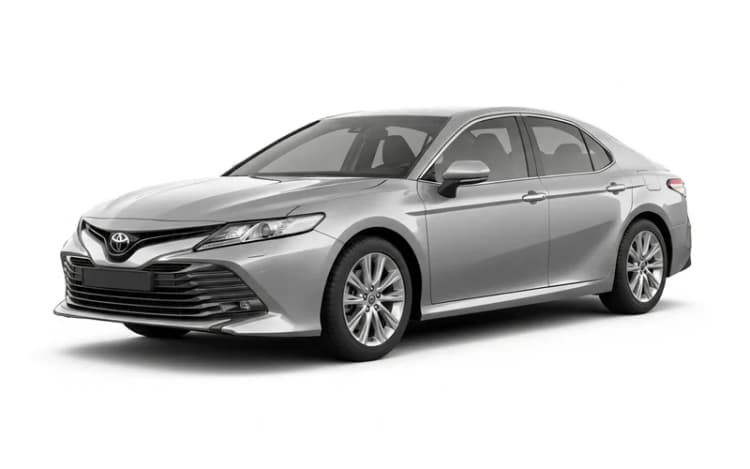
At a glance

Toyota Camry built around 2020: about average at the MOT

Toyota Camrys built around 2020 fail their MOT about as often as similar cars the same age.

Key figure

8% of MOT tests on Toyota Camrys built around 2020 ended in a fail (retests included), against 9% for similar cars the same age.

Most common issue

The most common MOT issue on Toyota Camrys built around 2020 involves the tyres.
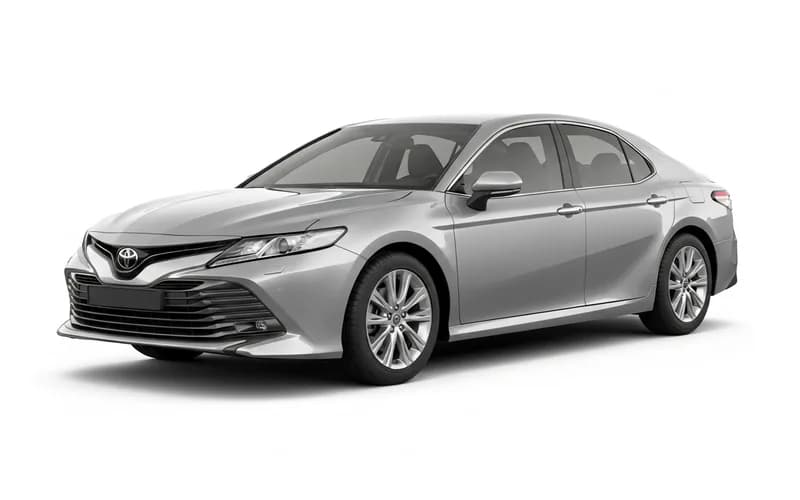
What to check before viewing

The Toyota Camry's most common MOT issues, turned into things to ask about or look for.

Brake pads

High priority

Ask when the pads were last replaced and check the warning-light history.

Brake discs

High priority

Ask for the date and mileage of the last disc replacement; visually check for a deep wear lip and rust pitting on each disc.

Tyres

Worth checking

Check tread depth across the full width on all four; uneven wear suggests alignment or suspension issues.

Visibility

Worth checking

Inspect the visibility carefully and ask the seller for repair history.

Vehicle-specific check

Worth checking

Check the car’s number plate on MOT Wise to see its own MOT history and any recalls for its build years.

How build years differ

Use the build-year guide below to separate newer build years from older ones.

Find your Camry's generation

Each card below is a different generation. Select your year and we'll highlight the match.

Camry XV70

XV70 (2019-present)

Not enough tests to rate
HYBRID ELECTRIC

7.8% fail rate, built around 2020 (5 years old)

Likely between 5.8% and 10.4%

Fails less often than the average car this age (about 1 in 8 MOTs, 12.8%)

Pre

Older models (before 2005)

PETROL

24.1% fail rate, built before 2000 (over 25 years old)

Likely between 19.5% and 29.3%

Fails about as often as the average car this age (about 1 in 4 MOTs, 25.2%)

Toyota Camry generations compared

Each generation is shown at 7 years old if it has at least 100 MOT tests at that age. If not, or if its cars are too new to be 7, it's shown at another age. We try ages close to 7 first. Newer generations have fewer years of data.

GenerationRatingFail rate
XV70 (2019-present)
No ratingNot enough tests to rate
No ratingNot enough tests to rate7.8%likely between 5.8% and 10.4%built around 2020 (5 years old)from 538 MOT tests at this age
Older models (before 2005)
No rating
No rating24.1%likely between 19.5% and 29.3%built before 2000 (over 25 years old)from 295 MOT tests at this age

Each row is one generation of the Camry, shown at the age printed under its fail rate. So rows can be different ages. Fail rate is the share of MOT tests that ended in a fail, retests included. A rating is given only when there are enough tests to place the fail rate in one rating band with 95% confidence.

Toyota Camry fail rate by age

This chart combines every Toyota Camry ever sold. It's good for the big picture. For one generation, scroll up to the build-year cards.

Below typicalAbove typicalHigh (28% or more)Highest fail rate
Age / builtFail rateMOT tests
3 yearsbuilt around 2022
1647.9%
4 yearsbuilt around 2021
3205.6%
5 yearsbuilt around 2020
5387.8%
6 yearsbuilt around 2019
1925.7%
22 yearsbuilt around 2003
8127.2%
23 yearsbuilt around 2002
9722.7%
25+ yearsbuilt 2000 or earlier
29524.1%

Fail rate is the share of MOT tests that ended in a fail. Retests count as tests. How we count fail rates Build years are worked out from age, so they are approximate. Tests counted are 2025 MOTs. Highest fail rate at 22 years old.

What goes wrong most often on 5-year-old Toyota Camrys

These issues come from 5-year-old Toyota Camrys, every generation combined.

All generations of this modelNot much data

Most common advisories and fails

In order of the share of MOT tests that recorded each one

  1. 1
    Advisory

    Tyre worn close to the legal limit or worn on the edge

    13.2%
    Advisory: 101Fail: 4 (4% of the times it was found)
  2. 2
    Advisory

    Tyre slightly damaged, cracking or perishing

    5.4%
    Advisory: 38Fail: 4 (10% of the times it was found)
  3. 3
    Advisory

    Brake pads wearing thin

    5.2%
    Advisory: 30Fail: 2 (6% of the times it was found)
  4. 4
    Advisory

    Brake disc worn, pitted or scored, but not seriously weakened

    2.4%
    Advisory: 16Fail: 0 (0% of the times it was found)
  5. 5
    Advisory

    Tyre has a cut that does not reach the ply or cords

    2.4%
    Advisory: 10Fail: 6 (38% of the times it was found)

Based on 538 MOT tests on 5-year-old Toyota Camrys, every generation combined.

Issues that often appear together

The pairs seen most often when an MOT on 5-year-old Toyota Camrys notes problems with more than one part of the car.

Issues that often appear together on this model

All generations of this modelNot much data
  1. Other + Tyres35%
  2. Brakes + Tyres33%
  3. Tyres + Windscreen & wipers20%
  4. Other + Windscreen & wipers14%

Both were noted at the same test. That doesn't mean one caused the other.

Across 51 MOT tests on Toyota Camry cars built around 2020 (5 years old) where more than one part of the car was noted.

How many are still registered, and recalls

How many of these are still registered in the UK, and what's been recalled across the model.

How many are still registered

Not enough registration data to show this for the Toyota Camry.

The share still registered can reflect demand, the cost of repairs, exports, write-offs and how owners use the car. It isn't proof of how long the car lasts mechanically.

Recall context

4 recalls in all

All 4 Toyota Camry recalls cover cars built in these years.

  • 1 Critical
  • 3 more

Top concerns

  • Risk of fire
  • The low pressure fuel pump located in the fuel tank could become inoperative
  • The rear seat belt assembly spring may be installed in an incorrect position

For the exact car, check GOV.UK's recall checker with the number plate.

Other saloons to compare

Other saloons to compare

  1. 1

    Lexus ES

    Same body type, tested at the same age

    Fail rate
    7.4%
    Fail, no pass in 3 days
    0.9%
    Dangerous
    2.5%

    No clear edge over the Toyota Camry on these figures.

    1,026 MOT tests on cars built around 2020

  2. 2

    BMW 7 Series

    Same body type, tested at the same age

    Fail rate
    7.7%
    Fail, no pass in 3 days
    1.9%
    Dangerous
    3.1%
    Still registered at 10 years
    79.9%

    No clear edge over the Toyota Camry on these figures.

    6 critical recall campaigns matching this model/build period.

    1,242 MOT tests on cars built around 2020

  3. 3

    Mercedes-Benz S-Class

    Same body type, tested at the same age

    Fail rate
    8.5%
    Fail, no pass in 3 days
    2.6%
    Dangerous
    3.6%
    Still registered at 10 years
    74.5%

    No clear edge over the Toyota Camry on these figures.

    5 critical recall campaigns matching this model/build period.

    1,094 MOT tests on cars built around 2020

Fail rate
= the share of MOT tests that ended in a fail. Retests count as tests.
Fail, no pass in 3 days
= the share of MOT tests that failed and still hadn't passed 3 days later. A fail that passed a retest within 3 days, even the same day, isn't counted.
Dangerous
= the share of MOT tests where the tester marked a fault as dangerous. It is against the law to drive the car until it is fixed.
Still registered at 10 years
= the share of cars still registered (taxed or declared off the road) 10 years after they were first registered.

Frequently asked questions

Built around 2020 (5 years old), the Toyota Camry across all generations combined fails MOTs noticeably less often than typical for this age. This is based on 538 5-year-old MOT tests from DVSA data. Each retest counts as a test.

These figures come from DVSA's MOT records. Across every Toyota Camry ever sold: 1,687 tests. The main figures are for cars built around 2020 (5 years old): 538 tests. They are a guide, not a guarantee. Always inspect the car or have a mechanic check it.